Every Tree a Statement: Chad’s World Tree Day Commemoration Shows That Climate Action Can Start With a Community and a Sapling
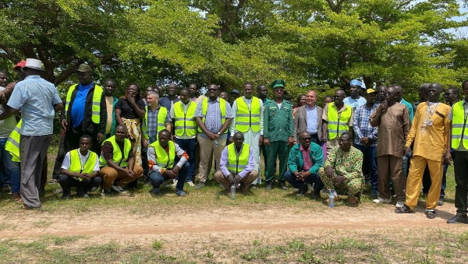
The World Tree Day commemoration in Chad’s Moyen-Chari region — bringing together local authorities and the Chad Sugar Company in the village of Maïmana under the theme “Act Now for the Climate” — is a grassroots climate action event whose significance is most visible not in the number of trees planted on a single day but in what the 5,400 trees planted over the past decade represent: the slow, patient accumulation of environmental restoration through sustained community commitment rather than episodic institutional gesture. The event’s explicit framing of tree planting and environmental protection as essential tools for safeguarding livelihoods, ecosystems, and future generations — rather than optional developmental extras — reflects an understanding of climate adaptation that is grounded in the lived experience of communities already absorbing the costs of recurring droughts, floods, land degradation, and biodiversity loss in one of the continent’s most climate-vulnerable regions.
The Chad Sugar Company’s integration of environmental restoration into its operational framework — connecting tree planting to sustainable production and long-term community stability — illustrates a model of corporate environmental responsibility whose developmental value lies in its embeddedness within the productive and social relationships of the communities it affects. Environmental programmes that are designed with communities rather than for them — that engage village leadership, create shared ownership of restoration outcomes, and emphasise maintenance as much as planting — build the kind of sustained environmental stewardship that one-time campaign events cannot achieve. Community leaders’ welcome of the initiative and the encouragement of residents to maintain as well as plant trees reflects an understanding that climate resilience is built through daily practice rather than annual ceremony.
Chad’s Moyen-Chari initiative carries a lesson for Africa’s broader climate adaptation architecture that deserves more prominent placement in continental policy discussions: that community-driven environmental action, modest in individual scale but cumulative in aggregate impact, is not a substitute for the large-scale infrastructure and financing that climate adaptation requires but a complementary dimension of resilience-building whose institutional support has historically been insufficient. The provincial environmental authorities’ call for stronger civic engagement and cooperation among public institutions, private actors, and citizens in protecting natural resources reflects a recognition that climate resilience cannot be built solely from above — that it requires the active participation of the communities whose livelihoods and futures are most directly at stake in how the natural systems around them are managed.