
Fifty Years of Sovereignty: Seychelles’ Golden Jubilee Brings the World to a Small Island With Global Ambitions
Seychelles’ commemoration of fifty years of independence, hosted by President Patrick Herminie and bringing together heads of state and senior officials from Africa, Asia, the Middle East, and Europe, is both a milestone celebration and a demonstration of the disproportionate diplomatic relevance that a small island state can build through sustained, deliberate engagement across multiple global regions. The guest list — Indian Prime Minister Narendra Modi, Mauritian Prime Minister Navinchandra Ramgoolam, African Union Commission Chairperson Mahmoud Ali Youssouf, senior officials from the UAE, China, and Russia — reflects a deliberate Seychellois foreign policy strategy of cultivating partnerships across the full spectrum of major global powers and regional blocs, positioning the archipelago as a genuine point of convergence rather than a peripheral actor in international affairs disproportionate to its size.
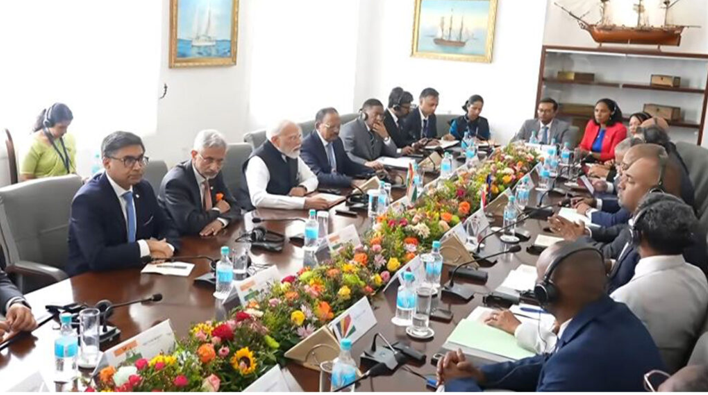
Prime Minister Modi’s state visit, which simultaneously marks fifty years of India-Seychelles diplomatic relations, carries particular strategic weight given India’s expanding engagement with Indian Ocean island states as part of its broader maritime security and economic strategy in the region. The bilateral talks, project inaugurations, and cooperation commitments expected during the visit reflect a relationship whose substance extends well beyond ceremonial anniversary recognition into practical areas of infrastructure, security, and economic partnership — areas in which Seychelles’ strategic location in the Indian Ocean gives it leverage in relationships with much larger partners that its population size alone would not predict.
Seychelles’ golden jubilee, framed explicitly by its organisers as reinforcing the country’s role as a bridge for cooperation between Africa and other Global South partners, captures a broader truth about small island states’ navigation of global diplomacy: that strategic geography, sustained diplomatic investment, and consistent engagement across diverse partnerships can generate a degree of international relevance that defies straightforward population or GDP-based assessments of national significance. For a nation whose entire population would fit within a mid-sized African city, hosting heads of state and senior ministers from five continents on a single occasion is itself a form of soft power achievement — one built through five decades of deliberate, patient diplomatic relationship-building since independence.


