
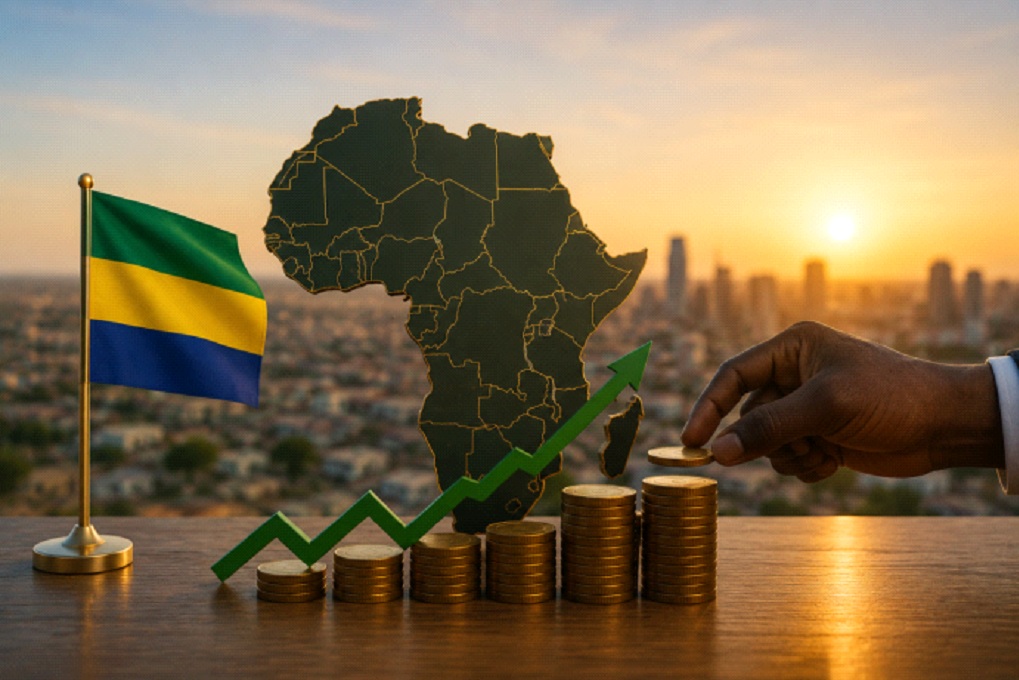
Gabon’s Bond Success Signals Africa’s Growing Capacity for Self-Determined Development
Gabon’s successful completion of its EOG 2026 multi-tranche public bond offering has announced something important about the direction of African development finance: the continent’s economies are demonstrating a growing capacity to raise capital through regional financial systems on their own terms. Targeting an initial 85 billion CFA francs, the offering closed with 173.5 billion CFA francs raised—more than $307 million—representing a 204 percent subscription rate that more than doubled the government’s expectations. Structured across two tranches, the proceeds will fund 1,960 kilometres of roads, water and electricity infrastructure across Greater Libreville, and investments in education and healthcare under the Gabon Nouvel Edifice programme. Beyond the immediate fundraising, the transaction reflects growing confidence in Central African financial markets and a broader trend of governments financing development priorities through regional investors rather than routing every major expenditure through the gates of international financial institutions whose conditions have not always aligned with African development timelines.
For decades, access to development finance in Africa was largely shaped by external borrowing, foreign capital markets, and the preferences of international creditors who exercised significant influence over how funds were deployed and what conditions attached to them. The strong response to Gabon’s issuance signals that regional investors are becoming more active participants in financing public investment—and that African governments can access capital without surrendering the policy flexibility that self-determined development requires. This evolution is significant not merely in financial terms, but in governance terms: deeper regional capital markets can provide governments with greater room to fund infrastructure, industrial development, and social priorities at their own pace, building local financial ecosystems rather than perpetuating the dependency relationships that have shaped so many African fiscal histories.
The implications extend beyond Gabon and Central Africa. As African countries pursue greater economic integration and seek to accelerate development under the framework of the African Continental Free Trade Area, the ability to mobilise African savings for African priorities becomes a critical dimension of continental sovereignty. Stronger regional financial markets can reduce dependency on external financing while creating new pathways for investment, economic coordination, and productive collaboration. Gabon’s successful operation is therefore more than a debt issuance—it is a proof of concept: evidence that the ambitions embedded in Agenda 2063 for a self-financing Africa are not simply aspirational language, but a trajectory that African markets, investors, and institutions are already beginning to build. The question is no longer whether Africa can finance its own development. The question is whether the political will exists to consolidate and accelerate what is already happening.





