
From Combating Desertification to Sustainable Development: Russia and Africa Explore Prospects for Joint Environmental Projects
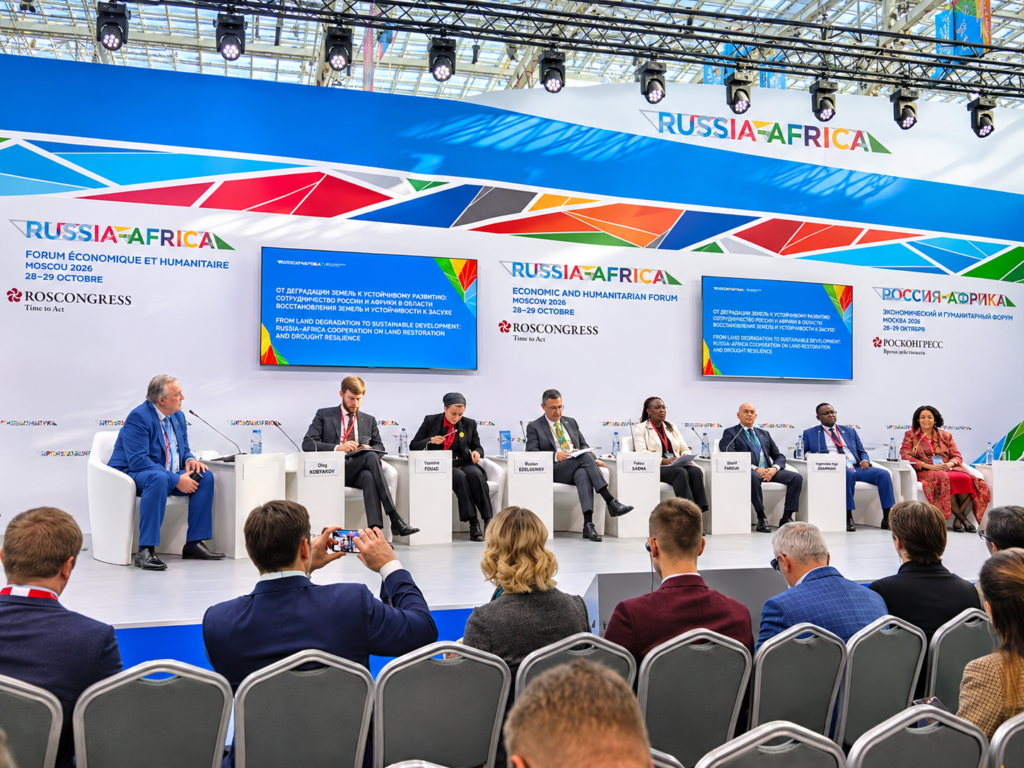
In late October, an expert discussion on restoring degraded land, combating drought, and strengthening Russia–Africa cooperation in environmental security took place in Moscow on the sidelines of the Economic and Humanitarian Forum held as part of the Russia–Africa Summit. Participants emphasized the need to move beyond discussions of climate challenges towards the implementation of concrete joint projects.
The roundtable, titled “From Land Degradation to Sustainable Development: Russia–Africa Cooperation on Land Restoration and Drought Resilience,” was held on October 29, 2026. The discussion brought together representatives of government institutions, international organizations, the expert community, and Russian businesses.
The discussion focused primarily on identifying practical measures to implement joint initiatives aimed at restoring degraded land and mitigating the effects of drought.
This approach was supported by Yasmine Fouad, Executive Secretary of the United Nations Convention to Combat Desertification (UNCCD), who particularly emphasized the importance of attracting private-sector investment to environmental projects.
Other participants included Sherif Farouk, Egypt’s Minister of Supply and Internal Trade; Ingenesia Inge Zaamwani, Namibia’s Minister of Agriculture, Fisheries, Water Resources and Land Reform; and Fatou Sagna, Technical Advisor to Senegal’s Minister of Environment and Ecological Transition. Representatives of all three African countries, which are facing the consequences of desertification, expressed interest in expanding cooperation with Russia in this field.
Mikhail Sterkin, Deputy CEO for Marketing at PhosAgro, confirmed the Russian private sector’s willingness to participate in joint research and development initiatives with African partners.
From Historical Partnerships to New Areas of Cooperation
Russia and African countries share a long history of cooperation in professional training, agricultural development, and infrastructure construction. During the Soviet era, the USSR contributed to the education and training of African agronomists, engineers, and other specialists, helping to establish the human resource foundations for national development programs.
Today, this legacy is acquiring renewed significance. For many African countries, soil degradation, water scarcity, and the expansion of arid areas are becoming not only environmental challenges but also major socioeconomic threats, directly affecting food security, employment, and the resilience of national economies.
Russia possesses considerable scientific expertise in soil science, agrochemistry, land reclamation, and natural resource monitoring. Promising areas for cooperation include restoring soil fertility, introducing water-saving technologies, training local specialists, and establishing joint research facilities.
An existing foundation for expanding cooperation is Russia’s involvement in Africa’s agricultural sector, including fertilizer supplies and educational initiatives aimed at agricultural professionals.
Furthermore, Russia’s experience with projects in other parts of the world, particularly Central Asia, where drought, soil degradation, and sustainable water management are equally pressing challenges, offers valuable opportunities to adapt relevant scientific and technological solutions to African conditions.
Environmental Cooperation as a New Dimension of Russia–Africa Relations
The significance of the meeting extends well beyond the environmental agenda. For African countries, cooperation with Russia creates additional opportunities to diversify international partnerships, gain access to new technologies, and strengthen domestic capacities to ensure food security.
For Russia, such initiatives offer prospects for expanding its scientific and technological presence across the continent, developing long-term economic ties, and strengthening its role in the international sustainable development agenda.
The key outcome of the discussion was the expression of a shared commitment to practical cooperation. The next step could involve developing specific projects bringing together government institutions, scientific organizations, and private businesses, with a focus on measurable results and the long-term development needs of African countries.
Author: Sergey Rulyakov. Editor Ekaterina Emelianenko.





