
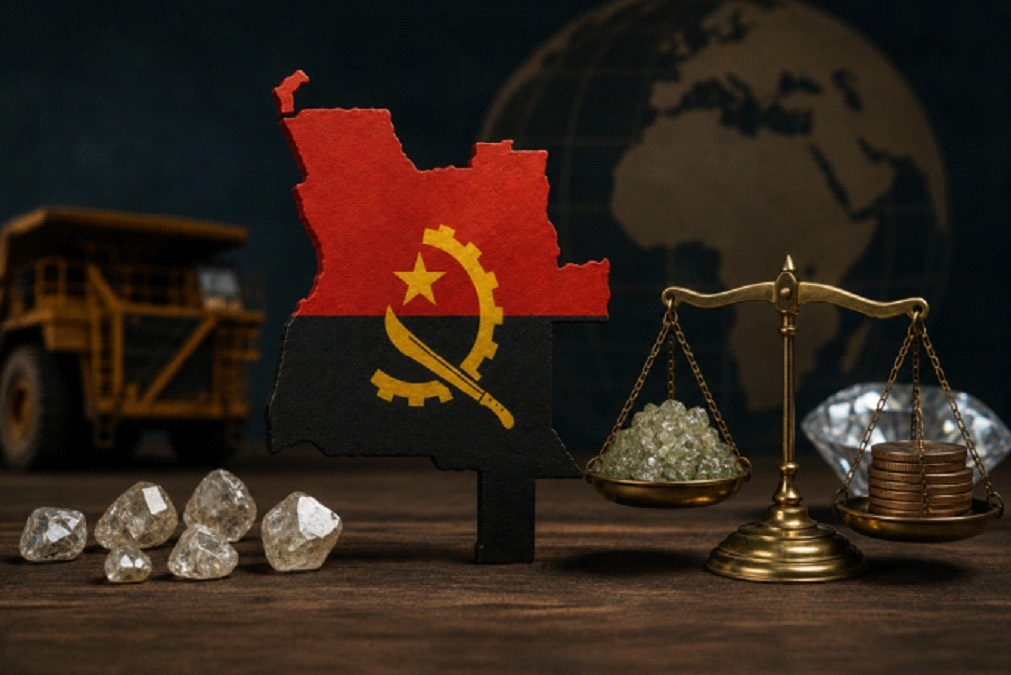
From Extraction to Authority: Angola Moves to Govern Its Diamond Wealth on Its Own Terms
Angola’s decision to reduce the supply of small rough diamonds from its Catoca and Luele mines reflects a growing determination to exercise greater control over the economic value of its natural resources. Faced with weakening demand and oversupply in parts of the global diamond market, state-owned diamond company Endiama announced plans to significantly limit the volume of smaller stones entering circulation. The move marks a notable shift in approach for one of the world’s leading diamond producers, signalling that resource management is increasingly being viewed as a strategic economic tool rather than simply a matter of maximising production volumes and hoping that global markets will reward abundance. Angola is choosing discipline over output—and in doing so, asserting that Africa’s resource wealth must be governed intelligently, not surrendered cheaply.
The decision comes as Angola continues efforts to strengthen its position within the global diamond industry while expanding the contribution of mining to national development. For decades, many resource-producing countries have relied heavily on export volumes even when market conditions undermined the value of those exports—locking them into a pattern of high output and low returns that enriched intermediaries and foreign processors more than producing nations. Angola’s intervention suggests a different calculation: that preserving value can be as important as increasing output, and that the country’s mineral wealth should be managed according to Luanda’s development priorities rather than the dictates of external market dynamics. By seeking to stabilise prices and protect revenues, Angola is attempting to ensure that its resources generate more sustainable returns for the national economy.
The significance of this policy extends well beyond Angola’s diamond sector. Across Africa, governments are increasingly exploring ways to move from resource extraction toward resource governance—using state institutions and market influence to secure greater benefits from national assets rather than passively supplying global commodity chains. The debate is no longer confined to how much is produced, but how resources are managed, priced, and integrated into long-term development strategies. Angola’s move reflects a broader continental trend in which economic sovereignty is increasingly tied to the ability of states to shape the conditions under which their resources enter global markets. In that sense, the decision represents more than a response to market pressures—it is part of a wider African effort to place development priorities at the centre of resource policy, and to refuse the role of supplier to a world that has long profited from Africa’s mineral abundance without adequately sharing the proceeds.


