From Gateway to Engine: Djibouti’s AfCFTA Engagement Positions the Horn’s Logistics Hub at the Centre of African Integration
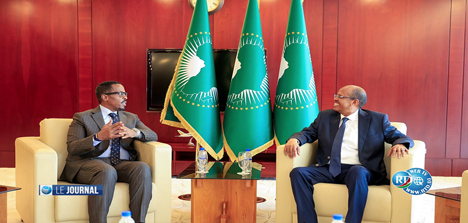
Djibouti Trade Minister Orbis Elmi Robleh’s meetings in Addis Ababa — with AU Commission Chairperson Mahmoud Ali Youssouf following the 18th AfCFTA Council of Ministers meeting in Abuja, and with AfCFTA Secretary-General Wamkele Mene to review Djibouti’s strategic priorities — are a diplomatic sequence whose significance lies in its positioning of a small state’s strategic assets at the centre of Africa’s most ambitious integration project. Djibouti’s maritime geography — controlling one of the world’s busiest shipping corridors at the mouth of the Red Sea, serving as the primary port for landlocked Ethiopia and a growing logistics hub for the broader East African region — gives it leverage in AfCFTA implementation discussions that its population size alone would not confer. A country through whose ports a significant share of Africa’s trade passes has a stake in the trade facilitation, customs harmonisation, and transport infrastructure dimensions of continental integration that is simultaneously national and continental.
The discussions’ alignment of Djibouti’s national development priorities with Agenda 2063 — specifically in trade facilitation, infrastructure development, industrialisation, and employment creation — reflects a governing understanding that AfCFTA’s value to Djibouti is not simply the market access it provides but the strategic positioning it enables. A country that is already a logistics hub for regional trade stands to gain disproportionately from an integration framework that increases trade volumes, diversifies the cargo moving through its facilities, and creates commercial relationships whose management and facilitation generate service sector revenue. Djibouti’s engagement with AfCFTA institutions is therefore simultaneously trade policy and economic development strategy — the recognition that continental integration and national competitive positioning are the same project.
The Abuja ministerial meeting’s broader outcomes — advancing implementation of AfCFTA’s tariff schedules, non-tariff barrier reduction, trade in services framework, and digital trade protocol — set the context within which Djibouti’s bilateral engagements with AU and AfCFTA leadership acquire operational content. Continental integration frameworks generate their development returns through the accumulated effect of specific bilateral and multilateral implementation decisions whose quality depends on the engagement of member states willing to treat AfCFTA not as an aspiration to endorse but as a programme to implement. Djibouti’s minister’s presence at the Abuja ministerial and immediate follow-up meetings in Addis Ababa signal precisely this kind of active implementation engagement — the governing seriousness about AfCFTA that differentiates states that will capture its benefits from those that will remain observers of others’ gains.