
Gabon and Equatorial Guinea Choose Dialogue Over Confrontation to Close a Half-Century Border Dispute
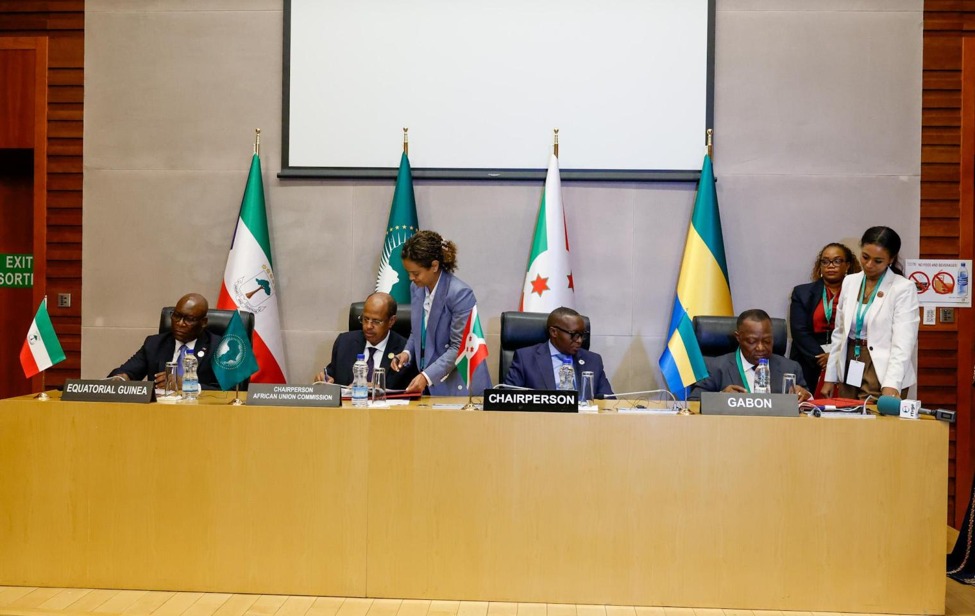
Gabon and Equatorial Guinea took a decisive step toward ending one of Central Africa’s oldest territorial disputes on the twenty-eighth of July, when the two countries signed a Joint Engagement Agreement in Addis Ababa to implement the International Court of Justice’s ruling of May 19, 2025 on the islands of Mbanié, Cocotiers, and Conga. The Court had recognised Equatorial Guinea’s title to the islands as Spain’s successor state and dismissed Gabon’s claim under the 1974 Bata Convention, but the agreement signed on the sidelines of the African Union’s 49th Executive Council session does not reopen that question of sovereignty. Instead, as African Union Commission chairperson Mahmoud Ali Youssouf put it, the accord reflects a shared commitment to dialogue, cooperation, and good neighbourliness in the spirit of African unity, signed by Equatorial Guinea’s foreign minister Simeón Oyono Esono Angüe and the president of Gabon’s Constitutional Court, Dieudonné Aba’a Owono.
What makes this moment significant is less the signature itself than the year of quiet continental mediation that preceded it. According to Gabonreview’s account of the process, presidents Brice Clotaire Oligui Nguema and Teodoro Obiang Nguema Mbasogo agreed to form a joint committee of experts during a state visit to Malabo in June 2025, followed by a second bilateral meeting in Libreville that October and a further facilitation session in Addis Ababa in February 2026 involving observers from Angola, Burundi, and the United Nations. Former Burundian foreign minister Albert Shingiro was appointed the AU’s special envoy to shepherd the process, shuttling between Libreville and Malabo to resolve the remaining friction points, particularly around the delimitation of adjacent maritime zones. Rather than reopening old grievances, the agreement now sets out the practical machinery for finishing that work: land border demarcation, the delineation of maritime space, and joint mechanisms to track progress on both.
The symbolism of an African-led resolution to a dispute rooted in colonial-era boundary lines was not lost on anyone in the room. The islands themselves are small and largely uninhabited, but they sit in waters believed to hold significant oil and gas reserves, which is precisely why the dispute endured for decades after both countries gained independence. Equatorial Guinea’s foreign minister described the agreement as proof that two African states could execute an international judicial decision with composure and good faith, while Gabon’s representative called it an act of mutual trust and a strong political commitment to peace in Central Africa. For an organisation whose founding purpose includes resolving exactly this kind of inherited territorial dispute through African institutions rather than external arbitration, the Addis Ababa signing stands as a working example of what continental unity looks like when it moves from rhetoric to a signed, implementable text.





