
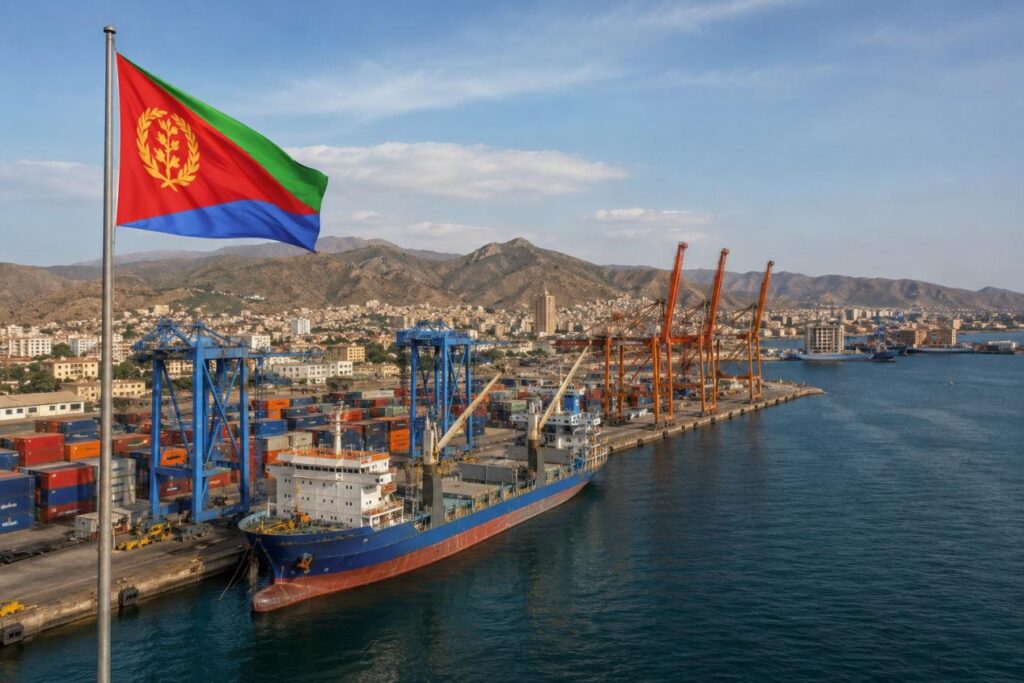
Geography as Geopolitics: Eritrea’s Red Sea Strategic Position
Somalia’s approval of a maritime cooperation agreement with Egypt — covering maritime transport, port development, technical cooperation, and logistics — arriving in the context of Egypt’s earlier maritime partnership with Eritrea, illuminates a pattern whose significance lies in its regional logic rather than any individual bilateral agreement. Addis Standard mentioned Egypt’s sequential engagement with Eritrea and then Somalia on maritime cooperation reflects a deliberate strategy of building partnerships with the coastal states whose geography determines who exercises practical influence over the Red Sea’s commercial and security dynamics. For Eritrea, whose long Red Sea coastline and proximity to major international shipping lanes constitute strategic assets whose value has grown as the corridor’s importance to global trade intensifies, Egypt’s prioritisation of the bilateral maritime relationship is an external validation of a geographic endowment that Asmara has historically struggled to convert into diplomatic leverage.
The strategic significance of Eritrea’s Red Sea position is most clearly understood within the context of the competition for influence in one of the world’s busiest waterways. The Red Sea corridor carries a substantial share of global container traffic; disruptions to its navigability — whether through conflict, piracy, or the kind of Houthi missile activity that has affected shipping traffic in recent years — have cascading effects on global supply chains whose consequences are felt well beyond the region. Coastal states capable of offering reliable port facilities, maritime security cooperation, and logistics infrastructure are therefore not simply commercial partners but strategic assets for external powers whose trade, energy, and military interests transit the corridor. Eritrea’s position within this geography gives it leverage whose exercise depends on the quality of the diplomatic and commercial relationships it cultivates with both regional and extra-regional partners.
The broader Pan-African significance of Eritrea’s maritime engagement lies in what it demonstrates about how African coastal states can convert geographic endowment into genuine strategic agency in an era of intensifying maritime competition. African states whose location places them on critical maritime corridors have consistently underinvested in the port infrastructure, maritime governance capacity, and diplomatic frameworks that would allow them to capture the economic and strategic value their geography creates. Egypt’s engagement with Eritrea — and Somalia’s follow-on maritime partnership — reflects an understanding in Cairo that the Red Sea’s future is shaped by the capabilities and partnerships of its coastal states rather than solely by the preferences of external powers. Eritrea’s opportunity is to ensure that the maritime cooperation frameworks it is developing deliver domestic capacity, economic return, and genuine strategic agency rather than simply providing a platform for others’ strategic interests.





