
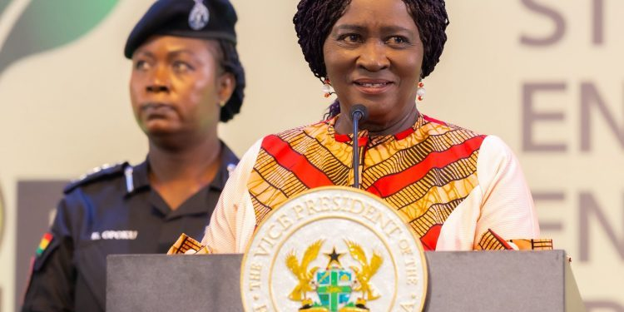
Ghana’s Vice President Calls for Fairer Global Governance and Greater Global South Representation
Ghana’s Vice President, Professor Jane Naana Opoku-Agyemang, has called on countries of the Global South to demand a greater role in shaping international decisions. She made the call at the 2026 Global South Academic Forum in Shanghai, China, held under the theme “Global South Political Parties: Governance and Modernisation.” According to the Ghana News Agency, she argued that developing countries need fairer global financial arrangements, stronger representation in international institutions and more influence over decisions that affect their futures. Drawing on the Pan-African vision of Kwame Nkrumah and liberation struggles across Africa, Asia, Latin America and the Caribbean, she said political independence was only the beginning. Countries must also build strong institutions, productive economies and systems that respond to the needs of their people.
The Vice President also pointed to China’s experience in long-term planning, industrialisation and poverty reduction as areas that developing countries could study. However, she cautioned against assuming that every country must follow the same development path. As Citi Newsroom reported, she urged countries to compare what has worked, learn from past failures and adapt useful lessons to their own circumstances. She also called for closer cooperation between universities and research institutions across the Global South, particularly in education, science, technology and artificial intelligence. Such collaboration, she argued, should help countries develop knowledge and solutions suited to their own societies. Her remarks placed local capacity, institutional development and cooperation between developing countries at the centre of the discussion.
On global cooperation, Professor Opoku-Agyemang argued that countries should not withdraw from international engagement simply because the existing system is unequal. Instead, they should work towards better multilateralism and a more representative international order. She also stressed that cooperation does not require countries to agree on everything, but demands the confidence to disagree respectfully and learn from one another. The address set out a clear position on the need for developing countries to have a stronger voice in global affairs. However, the available reports do not identify a new agreement, funding commitment or joint programme announced at the forum. The next question is how the ideas raised in Shanghai can lead to practical cooperation, stronger research partnerships and changes in international decision-making that address the needs of people across the Global South.
PHOTO SOURCE: CITI NEWSROOM
Author: Randy Lawson.





