
Deconstructing the Great Lakes Crisis Beyond the Colonial Canvas
The persistent volatility in the African Great Lakes region—most acutely observed in the eastern Democratic Republic of the Congo (DRC) and its geopolitical ties with Burundi—is often framed through modern diplomatic press releases or immediate security crises. However, a deeper socio-political analysis reveals that contemporary political alignments in Kinshasa and Bujumbura remain heavily anchored in structural divide-and-rule methodologies codified during European imperial expansion. Drawing from analytical perspectives, this research synthesis evaluates how German and Belgian colonial administrations dismantled fluid pre-colonial social systems, replaced them with rigid socio-ethnic classifications, and how regional political elites continue to weaponize these historical fractures to consolidate power today.
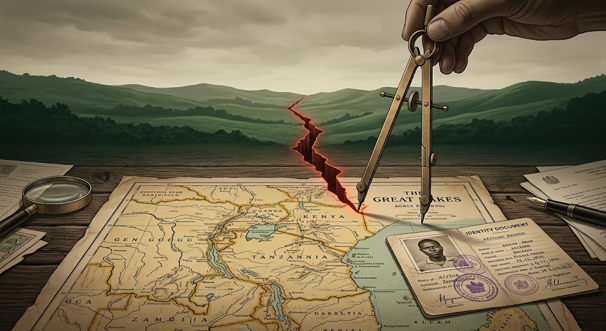
Prior to late 19th-century European penetration, political units across present-day Rwanda, Burundi, eastern DRC, and northwestern Tanzania operated within interconnected socio-political frameworks. Historically, indigenous designations were socio-economic and political categories rather than immutable genetic classifications. The turn of the century introduced European racial theories—most notably the “Hamitic hypothesis”—which sought to rationalize imperial control by categorizing populations into distinct racial hierarchies. German administrators like Richard Kandt and the subsequent Belgian authorities systematically institutionalized these divisions. As documented in broader regional research by Impunity Watch and historical analyses published on AllAfrica, the introduction of ethnic identity cards in 1933, the replacement of dynamic local governance with rigid caste structures, and the arbitrary drawing of borders across culturally unified communities permanently altered the region’s social ecosystem, creating fault lines that outlasted formal independence.
In the contemporary arena, the failure to comprehensively deconstruct these colonial structures continues to drive conflict in the eastern DRC. While post-genocide Rwanda embarked on institutional reforms aimed at replacing colonial identity markers with inclusive citizenship, political leadership in Kinshasa and Bujumbura has frequently retained ethnicized legal and social frameworks. In the DRC, state-sanctioned narratives restricting land rights and citizenship for Kinyarwanda-speaking communities mirror colonial-era outsider tropes. Concurrently, tactical alliances between regional military forces and non-state armed groups—such as the FDLR—demonstrate how political elites employ historical grievances to maintain state power. Sustainable peace across the Great Lakes ultimately requires moving beyond crisis management to systematically dismantle the legal, social, and political constructs inherited from the colonial era.
Author: Randy Lawson.





