Indonesia highlights forest fires, climate bill at COP31 Leader Summit
COUNTRY:INDONESIA.
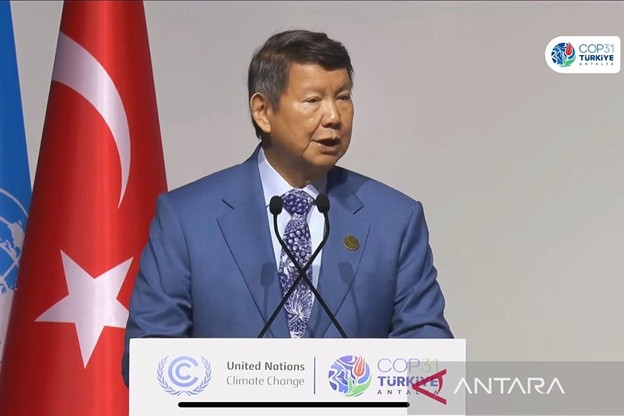
Indonesia’s Special Presidential Envoy for Climate and Energy, Hashim Djojohadiksumo, addressed the COP31 Leaders’ Summit in Antalya, outlining the key challenges facing the country: rising sea levels, extreme weather events, droughts, and wildfires, exacerbated by the El Niño phenomenon. Emphasizing Jakarta’s serious approach, he stated:
To address these issues, the Indonesian government is taking large-scale practical steps. More than 25,000 local residents are already participating in forest fire prevention, and the number of rangers and firefighters is planned to increase from 8,000 to 70,000. At the same time, early warning systems are being improved, and protected areas and national parks are being expanded. An important institutional decision was the creation of the National Peatland and Mangrove Management Agency under the auspices of President Prabowo Subianto.
The speaker emphasized that Indonesia does not intend to sacrifice the economy for the environment, or vice versa.
“More than 285 million Indonesians depend on food security, a reliable energy supply, jobs, clean water, and a safe environment. We will not choose between development and climate action. President Prabowo Subianto’s vision is very clear; we must achieve both”
As part of this strategy, the country is accelerating the transition to clean energy, increasing the productivity of degraded lands, and developing high-value-added industries.
To ensure food security, the government has taken a strict policy of not expanding agricultural land at the expense of forests, especially primary forests. Thanks to the social forestry program, more than 1.4 million families have already gained access to 8 million hectares of forested land, and by 2029, the area of officially recognized community forests is planned to reach 1.4 million hectares. Confirming that more than half of the country’s territory remains covered by forests, the special envoy assured that Indonesia will continue to preserve its natural heritage, which is why it plans to ratify the Equitable Climate Change Management Bill in the near future.