
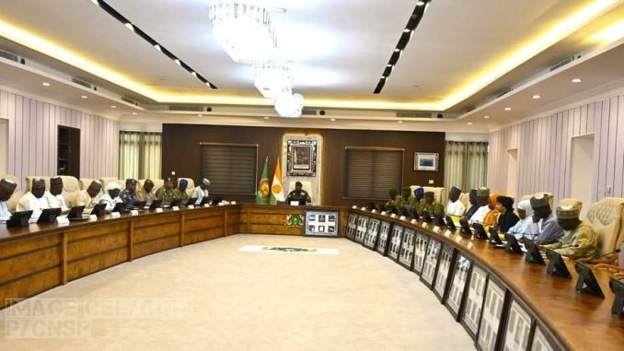
Institutional Expansion: Niger Broadens CNUT Mandate to Collect Royalties on Strategic Mining and Energy Commodities
The Nigerien government has expanded the operational prerogatives of the Nigerien Council of Public Transport Users (CNUT), authorizing the state institution to collect port and airport fees on critical strategic resources, including crude oil, gold, and other high-value mining and petroleum products. According to primary regional reporting by Aïr Info News, the policy adjustment was formally endorsed during the Council of Ministers meeting on September 10, 2026. The decision updates decree No. 2015-055/PRN/MT/MF—which has regulated port charges for over a decade—to ensure that Niger’s evolving export profile, particularly surging hydrocarbon and mineral transport traffic, is fully integrated within the national maritime and airport fee collection frameworks.
The regulatory update establishes a modernized framework for tracking transit fees while outlining clear revenue-sharing mechanisms across state entities. Official administrative coverage published by the Agence Nigérienne de Presse (ANP via Official Government Portal) confirms that incoming revenues and financial penalties generated under the expanded royalty system will be systematically allocated among the Public Treasury, the CNUT, and the Nigerien Road Safety Agency (ANISER). By expanding the scope of collectible royalties beyond traditional freight and uranium to include all liquid bulk hydrocarbons and precious metals, Niamey aims to capture greater fiscal value from its burgeoning extractive sectors while bolstering domestic infrastructure development and road safety initiatives.
For a landlocked nation heavily dependent on transit corridors across West and North Africa, the institutional strengthening of the CNUT plays a central role in national supply chain efficiency and sovereign resource management. Logistics and institutional analyses documented by the Conseil Nigérien des Utilisateurs de Transports highlight that monitoring international transport corridors, managing transit documentation, and enforcing regulatory compliance are vital for mitigating economic constraints for local importers and exporters. By tightening state oversight on logistics fees for high-value export commodities, Niger is reinforcing its capacity to monitor commercial freight flows, improve trade corridor competitiveness, and secure critical public revenues from its primary natural resources.
PHOTO SOURCE: AÏR INFO NEWS
Author: Randy Lawson.





