
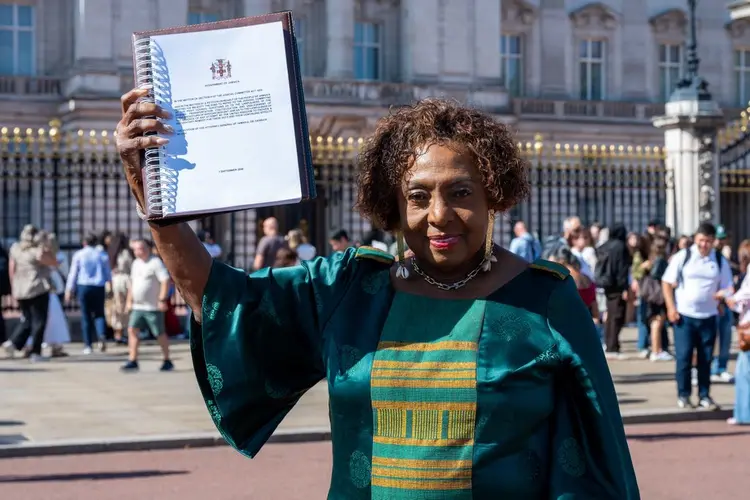
Jamaica Formally Submits Slavery Reparations Petition to King Charles III
Jamaica has formally submitted a historic petition concerning the legacy of chattel slavery to King Charles III in London, marking an unprecedented legal approach by a Commonwealth nation to pursue reparatory justice. Led by Culture Minister Olivia Grange, the Jamaican delegation lodged the petition with the King in his capacity as Jamaica’s Head of State. The submission requests that the monarch refer three pivotal legal questions to the Judicial Committee of the Privy Council—Jamaica’s highest court of appeal—to determine whether the forced transport and enslavement of Africans violated English and international law, and whether Britain bears a legal obligation to provide redress. Details on the formal legal filing were confirmed by the Caribbean National Weekly — Jamaica Files Reparations Petition to King Charles.
Addressing media inquiries following the filing, Minister Grange explicitly clarified that the petition does not contain a financial or monetary claim against the British Crown. Instead, the initiative is designed to establish foundational legal clarity surrounding the historic atrocities of the transatlantic slave trade and address enduring systemic underdevelopment. Grange emphasized that obtaining legal answers from the Privy Council is a critical prerequisite to determining subsequent steps for long-overdue settlements and institutional remedies. Global coverage of the legal questions put before the court is tracked by Africanews — Jamaica Slavery Reparations Campaign.
The legal filing coincides with broader efforts by Kingston to address historical colonial grievances and secure cultural restitution. Parallel to the petition, the Jamaican delegation is meeting with British Museum officials to advance formal discussions on repatriating colonial-era artifacts to their island origin. While Buckingham Palace acknowledged the submission and reaffirmed King Charles’ commitment to addressing historic wrongs, the petition underscores growing momentum across the Caribbean for formal accountability. International reactions and analysis regarding the Commonwealth precedent are detailed by Modern Ghana — Slavery Reparations Legal Route.





