
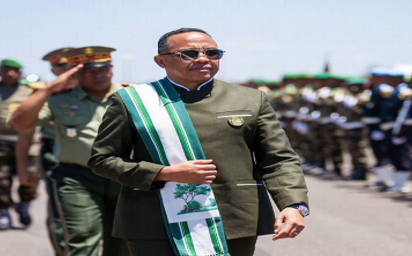
Madagascar President Challenges Foreign Influence and Demands Genuine Sovereignty
Madagascar’s President, Colonel Michaël Randrianirina, has called for greater national sovereignty, arguing that formal political independence remains incomplete when a nation remains economically dependent and faces diplomatic pressure from foreign powers. Speaking in Antsohihy on October 14, 2026, during national celebrations marking the 68th anniversary of the proclamation of the Malagasy Republic, the head of state criticized what he described as a modern iteration of colonial influence that restricts national development. According to primary reporting by Madagascar-Tribune, the president stressed that international recognition and state institutions alone do not guarantee effective control over a country’s economic future, raising fundamental questions about how Global South nations can preserve self-determination under heavy external debt burdens.
Addressing international relations and cultural policy, President Randrianirina identified development financing and foreign affairs as two core sectors requiring immediate domestic autonomy. He revealed that foreign diplomatic actors had questioned Antananarivo’s bilateral choices, asserting that Madagascar must diversify its international partnerships without having to justify its decisions to foreign governments. Furthermore, as documented in regional coverage by L’Express de Madagascar, the president criticized French-language educational institutions that restrict students from speaking Malagasy on school grounds, extending the sovereignty debate into cultural identity, linguistic rights, and national education policy.
Concluding his address in the Sofia region, President Randrianirina called for national unity, urging political factions, civil society, and local leaders to transcend partisan rivalries in favor of state reconstruction. However, as highlighted in supplementary reporting by L’Express de Madagascar, the ultimate success of the government’s refounding agenda depends on executing concrete economic policies that improve public infrastructure, healthcare access, and regional market access. For small island states, long-term sovereignty will ultimately be evaluated not by political rhetoric, but by whether domestic policies expand national choices, reduce external fiscal vulnerabilities, and deliver tangible social progress for citizens.





