Nile, Sea, and Siege: Ethiopia and Egypt’s Deepening Rivalry Is a Test of Whether Africa Can Govern Its Own Geography
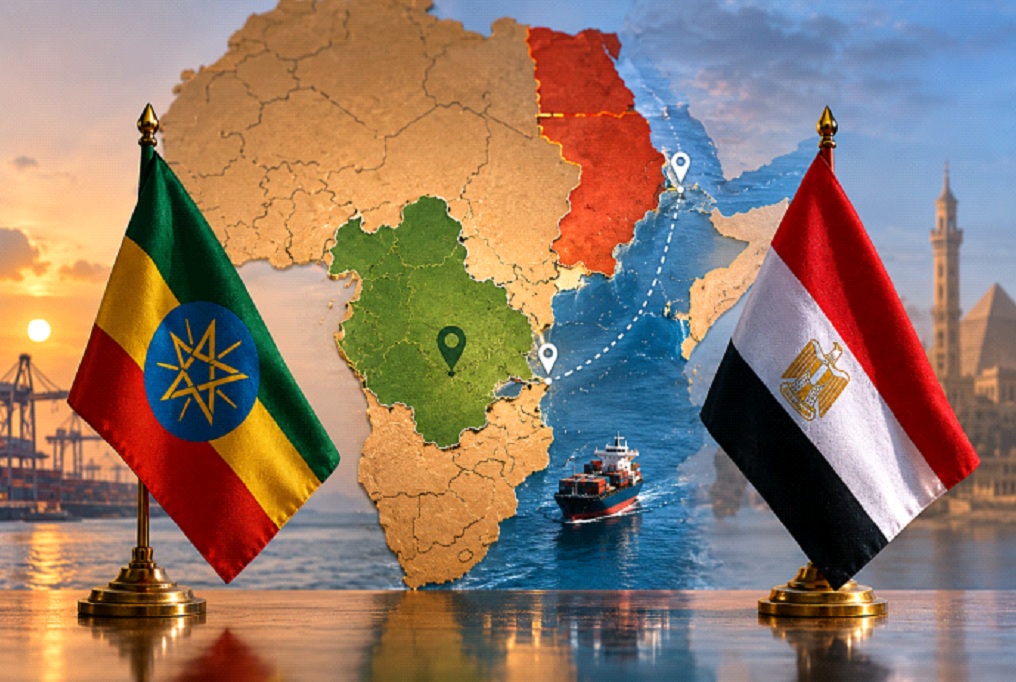
Ethiopia’s accusation that Egypt is pursuing a deliberate strategy of ‘encirclement’ against Addis Ababa — through intensified diplomatic and security engagements with Eritrea, Djibouti, and Somalia in response to Ethiopia’s push for sovereign sea access — marks the latest escalation in a geopolitical contest that has become one of the most consequential and revealing conflicts in contemporary African politics. For Ethiopia, the issue is existential in its developmental and strategic dimensions: a nation of more than 120 million people, landlocked since Eritrea’s independence in 1993, whose Prime Minister Abiy Ahmed has elevated the demand for sea access from an economic concern to the centrepiece of a national strategy premised on the idea that a country of Ethiopia’s size, population, and ambition cannot indefinitely accept the constraints imposed by a post-colonial geography it did not choose and that its historical borders did not originally impose.
Egypt’s position cannot be understood outside the Grand Ethiopian Renaissance Dam, which Cairo continues to regard as a strategic existential threat to its Nile water security and which has remained unresolved through years of negotiations, AU mediation attempts, and competing hydrological studies. For Egyptian policymakers, Ethiopia’s simultaneous assertion of regional ambitions — sea access, security partnerships, diplomatic influence across the Horn — reads as a multi-front challenge to Egyptian interests that requires a multi-front response. Ethiopian officials, meanwhile, argue that the pattern of diplomatic encirclement represents an attempt to isolate Addis Ababa and constrain its regional role through the construction of an anti-Ethiopian alliance among its neighbours — a characterisation that Cairo disputes but that reflects the genuine depth of mistrust between two of Africa’s largest, most historically proud, and most strategically competitive states.
The wider Pan-African challenge embedded in the Ethiopia-Egypt confrontation is one that the continent must eventually answer for itself: whether Africa’s most consequential bilateral disputes — over water, geography, borders, and regional power — can be transformed from zero-sum competitions that external powers exploit into frameworks for negotiated continental cooperation. The colonial architecture of African borders and water agreements created conditions for exactly these disputes, and the international community has largely managed them through mediation rather than resolution, allowing the underlying tensions to compound while the strategic interests of non-African actors continue to shape the region’s political landscape. Africa’s long-term sovereignty requires the construction of continental governance mechanisms capable of resolving these disputes through African institutional frameworks, on terms that serve African peoples rather than external strategic interests. The Horn’s tensions are a test of whether that construction has begun in earnest — or whether the continent remains trapped in a geography of rivalry that someone else originally designed.