
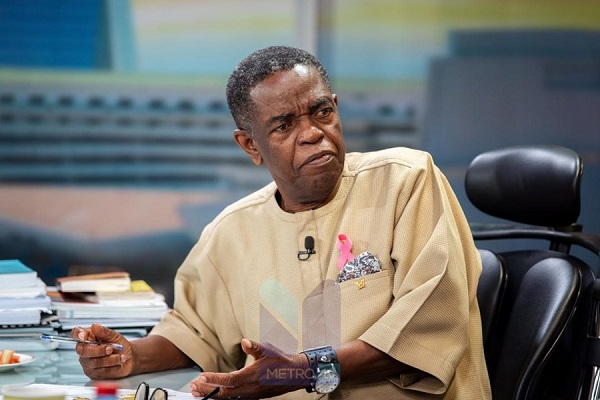
Nkrumah’s Unfinished Business: Kwesi Pratt Jr.’s Liberation Day Address Reconnects Ghana’s Independence to the Sahrawi Struggle
Ghanaian journalist, political activist, and Pan-African advocate Kwesi Pratt Jr.’s address at the Liberation Day commemoration in Accra — marking the first anniversary of an event inspired by Kwame Nkrumah’s legacy — is a political intervention whose significance lies in the continuity it asserts between Ghana’s own independence struggle and the contemporary struggles of peoples who remain under occupation or experiencing the denial of self-determination. By expressing solidarity with the Sahrawi people alongside his broader analysis of African sovereignty and resource control, Pratt placed the Western Sahara question within the Pan-African liberation framework whose intellectual architecture Nkrumah constructed: the recognition that Ghana’s independence was not an achievement for Ghana alone but was explicitly intended as the first step toward continental liberation whose completion required the freedom of every African people from colonial or occupying authority. The Sahrawi claim to self-determination is, within this framework, not a peripheral diplomatic question but an unresolved item on the African liberation agenda whose continued denial contradicts the principles that independence movements across the continent fought to establish.
Pratt’s argument that Africa’s future must be built through organisation, collective action, and control over the continent’s own resources rather than dependence on foreign influence reflects a political economy analysis whose contemporary relevance is as acute as its historical roots. The structures of economic dependency that Nkrumah identified as neo-colonialism — formal political sovereignty combined with continued external control over productive assets, financial systems, and terms of trade — have not been dissolved by the six decades of independence that separate the current moment from the Ghana that inspired his vision. The academic literature on structural transformation, the policy debates about mineral beneficiation, the advocacy for debt restructuring on equitable terms, and the demands for fairer commodity value chain distribution that animate contemporary African economic discourse are all engaged with the same structural reality that Nkrumah’s analysis identified: that political independence without economic sovereignty is incomplete liberation.
The significance of Pratt’s Liberation Day address for the continental Pan-African conversation is its insistence on treating solidarity not as a rhetorical aspiration but as a political and material practice. Solidarity with the Sahrawi people is not simply an expression of sympathy for a people under occupation; it is a claim about what Pan-African unity actually requires — the consistent application of self-determination principles regardless of which external power’s interests the application challenges. As Africa’s multilateral institutions navigate the Western Sahara question within the African Union framework, and as bilateral relationships between African states and Morocco or the SADR reflect competing assessments of where solidarity requires them to stand, voices like Pratt’s that invoke the founding principles of the African liberation movement serve a governance function: they hold the continent accountable to the standards it publicly claims and test whether those standards are applied consistently or selectively.


