No More Forgotten Commitments: Liberia’s President Demands Reparatory Justice Be Put Into Action
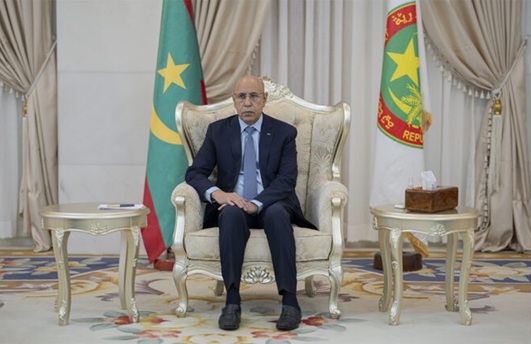
Liberian President Joseph Nyuma Boakai’s address to the High-Level Consultative Conference in Accra was less a diplomatic statement than a political challenge: stop making history with resolutions and start making justice with action. Warning against allowing the landmark United Nations resolution on the trafficking and enslavement of Africans to become another forgotten commitment shelved alongside decades of prior declarations, Boakai placed his country’s credibility — and his own — behind a demand that political will now match the moral clarity the UN resolution represents. His remarks came as heads of state, diplomats, scholars, civil society representatives, and members of the African diaspora gathered to discuss practical steps toward implementation — a gathering whose significance will ultimately be measured not by the quality of the speeches delivered but by whether any of them translate into structures capable of delivering redress.
At the heart of Boakai’s intervention was the argument that the legacy of slavery is not historical — it is structural. Centuries of exploitation generated wealth whose distribution shaped the international economic order that Africa inherited and continues to navigate, while leaving enduring patterns of inequality, underdevelopment, and institutional fragility whose lineage runs directly through the plantation economy to the present. Rather than limiting the discussion to financial compensation, Boakai advocated a broader architecture of reparatory justice: truth-telling, reconciliation, educational reform, cultural restoration, and sustainable development partnerships that address the ongoing consequences of historical dispossession. He also proposed the establishment of an African Union–United Nations Expert Commission to develop a Global Reparatory Justice Mechanism — a concrete institutional proposal that moves the conversation from aspiration toward governance.
The conference reflected an increasingly Pan-African understanding of reparations as simultaneously historical reckoning and future-oriented project. Calls for the restitution of looted cultural artefacts, deeper engagement with the African diaspora, and expanded investment in historical research highlighted the growing emphasis on restoring connections that slavery and colonialism severed — connections between Africa and its diaspora, between cultures and their material heritage, between peoples and the histories they were separated from. Reparatory justice, in this framing, is not simply about what was taken but about rebuilding what was destroyed. Boakai’s appeal reinforced the message emerging from Accra with the clarity it deserved: that recognition of historical injustice is necessary but not sufficient, and that the measure of this moment will be whether coordinated action capable of delivering restoration, dignity, and lasting justice actually follows the words being spoken in Ghana’s capital.