
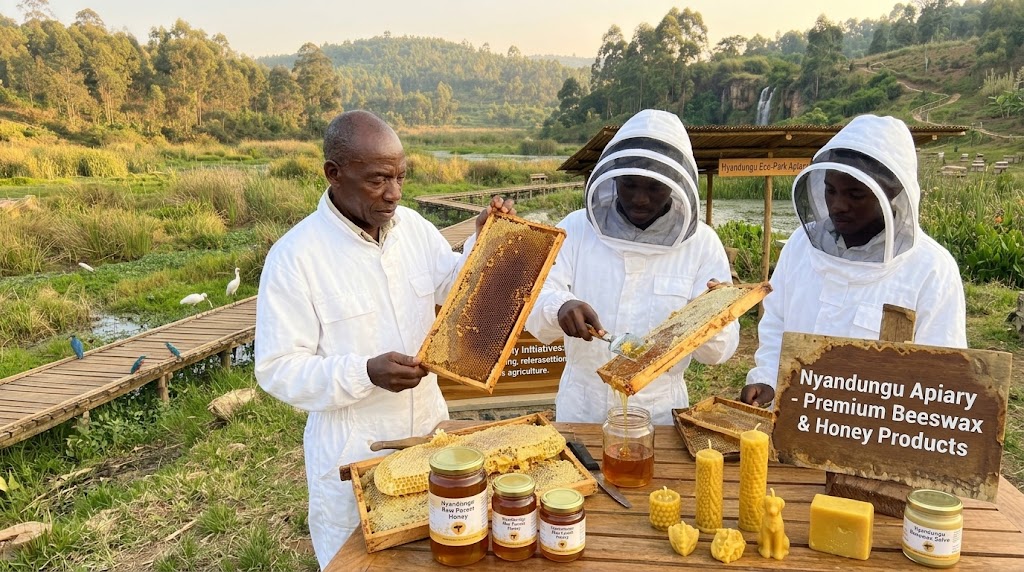
Nyandungu Eco-Park Targets Rwf40 Million in Annual Honey Revenue
Nyandungu honey production in Kigali, Rwanda, targets annual revenue of Rwf40 million. The project aims to produce approximately 5,000 kilograms of honey each year at full capacity. According to The New Times, the initiative aims to generate income through beekeeping while supporting environmental sustainability. The venture also highlights the potential of honey production to support small businesses and create new economic opportunities. However, the production and revenue figures remain targets rather than confirmed results. Its success will depend on production levels, operating costs and access to reliable buyers.
Nyandungu Eco-Park covers approximately 121 hectares and supports wetland restoration, biodiversity protection and environmental education. The Rwanda Development Board explains the park’s role in conserving Rwanda’s natural environment. By combining beekeeping with nature-based tourism, the project could create additional income opportunities. Local businesses may also benefit from honey processing, packaging, transportation and sales. These activities could strengthen the link between conservation and economic development.
Rwanda also promotes agricultural development and improved market access. The Ministry of Agriculture and Animal Resources outlines strategies to improve agricultural production and market connections. Within this wider context, Nyandungu honey production could support sustainable livelihoods if the project achieves its targets. Effective beekeeping practices, consistent product quality and reliable distribution will be important to its long-term performance. Tracking actual production and sales will also help measure its economic contribution. Ultimately, the projected Rwf40 million in annual revenue remains a goal, not confirmed income. The venture’s results will show how effectively the park can combine environmental conservation with sustainable business development.





