One of Twelve: Burkina Faso’s UN Reform Vision Earns International Recognition and a Seat in the Multilateral Transformation Debate
Burkina Faso’s selection among 12 UN member states — out of 193 — to participate in the pilot phase of the UN 80 reform initiative is a diplomatic recognition whose significance extends well beyond the institutional honour it represents. The selection reflects the coherence and force of Burkina Faso’s advocacy for a more balanced multilateral order: Foreign Affairs Minister Karamoko Jean Marie Traoré’s argument that the current UN system requires restructuring to ensure all states have meaningful participation in global decision-making is not a peripheral concern but the central governance challenge of an international system whose design still reflects the power arrangements of 1945. That a country simultaneously navigating a security crisis and diplomatic realignment can secure recognition for the quality of its multilateral reform thinking demonstrates that governance vision and geopolitical difficulty are not mutually exclusive.
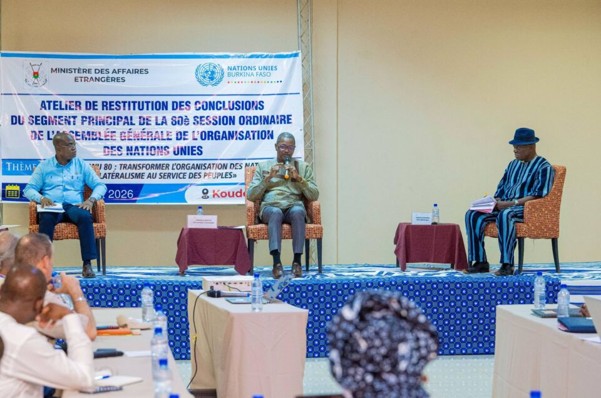
The substantive content of Burkina Faso’s reform position — that the UN Security Council requires restructuring, that developing countries must have genuine rather than nominal influence in international decision-making, that institutional effectiveness cannot be held hostage to the withdrawal of individual powerful member states, and that financing frameworks must be robust enough to sustain programmes that millions of vulnerable people depend on — describes the reform agenda that African states have been advancing in various forms since the post-colonial multilateral moment. The Koudougou workshop’s broader message — that international interventions must align with national development priorities rather than imposing external frameworks — connects Burkina Faso’s specific reform proposals to the wider sovereignty-centred multilateralism that the Alliance of Sahel States has been articulating across multiple international forums.
The preparation for participation in the 81st UN General Assembly alongside AES partners adds a collective dimension to Burkina Faso’s multilateral engagement that transforms it from a single-country advocacy position into a coordinated regional voice. A bloc of Sahelian states presenting unified reform proposals at the UN General Assembly is diplomatically more consequential than individual national positions — and the combination of Burkina Faso’s pilot phase participation with AES collective engagement creates a multilateral strategy whose parts reinforce each other. For the broader African conversation about the terms on which the continent engages international institutions, Burkina Faso’s UN 80 selection offers an important lesson: that assertive advocacy for systemic reform, grounded in clearly articulated principles and sustained diplomatic engagement, can produce institutional recognition even when the country advocating is simultaneously challenging other dimensions of the existing international order.