People Are the Policy: Niger’s Diaspora Forum Transforms Migration into a National Development Asset
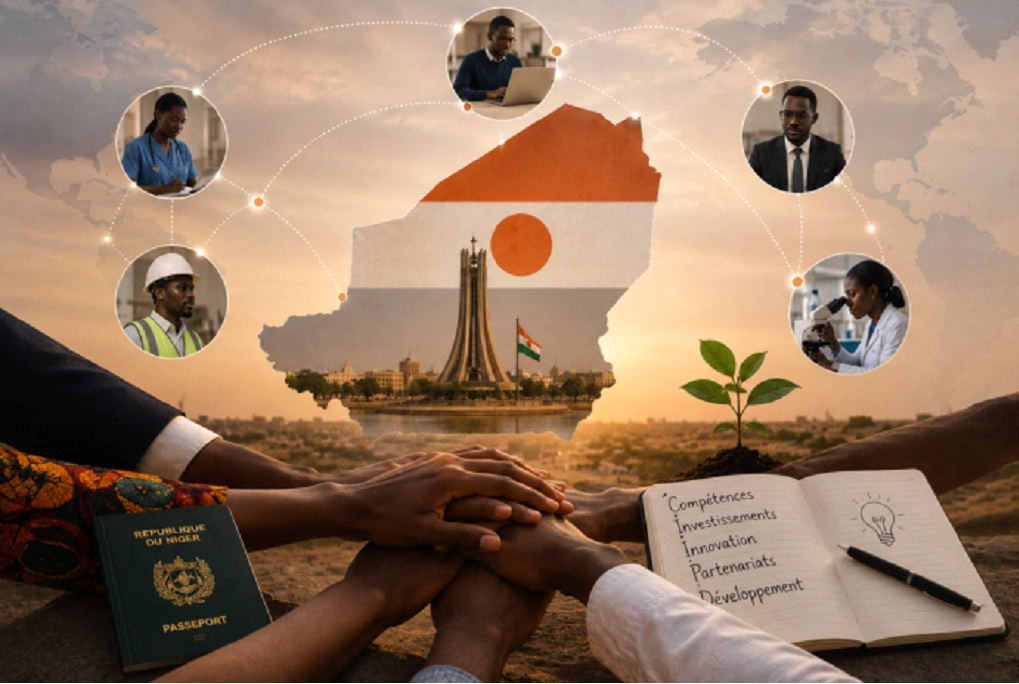
Niger’s decision to convene the 2026 Diaspora Forum in Niamey reflects a growing recognition that national development is no longer confined by geography. Scheduled for 28–29 July, the gathering will bring together Nigeriens living abroad to contribute ideas, investments, expertise, and professional experience to the country’s ongoing refoundation process—the programme of political and institutional transformation that began following the CNSP’s seizure of power in July 2023. The Foreign Minister has described the diaspora as Niger’s ‘ninth region,’ a formulation that signals a deliberate shift: Nigeriens abroad are no longer viewed primarily as a source of remittances, but as sovereign partners in national reconstruction. At a time when many developing countries compete for investment and skills, Niger is increasingly treating its global community not as a population lost to migration, but as a strategic resource whose knowledge, networks, and commitment to home belong at the centre of the country’s future.
The initiative comes as the country pursues reforms aimed at strengthening governance, economic resilience, and long-term development capacity. While remittances remain an important source of support for many families, policymakers are placing greater emphasis on the transfer of knowledge, technology, entrepreneurship, and professional expertise. Across sectors such as education, healthcare, infrastructure, digital innovation, and public administration, diaspora communities possess skills and international networks that can complement domestic efforts. By creating a formal platform for engagement, authorities hope to transform diaspora contributions from isolated individual efforts into a coordinated component of national development strategy—ensuring that the intelligence, experience, and ambition accumulated abroad flows back into a country actively rebuilding itself on its own terms.
The broader significance of the forum lies in its understanding of sovereignty as a question of human capital as much as territory or institutions. The HCNE General Assembly, to follow immediately on July 30–31, will elect new leadership for the body coordinating diaspora affairs—a structural investment in making the engagement permanent rather than symbolic. Across Africa, governments are increasingly seeking ways to convert migration into an asset rather than a developmental loss. Niger’s diaspora initiative reflects this emerging reality while adding a layer of political urgency: the Refondation has explicitly framed itself as a rupture with colonial and neocolonial governance models, and the diaspora carries knowledge, technical expertise, and international legitimacy that no domestic reconstruction effort can afford to leave untapped. By treating citizens abroad as partners in rebuilding rather than distant observers, Niger is advancing a model of nation-building that places people, skills, and collective responsibility at the centre of development.