
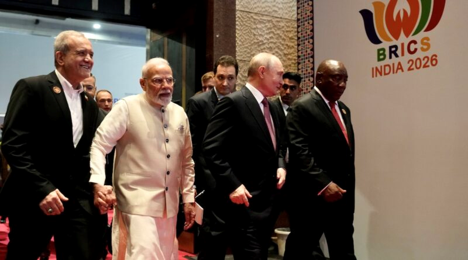
President Ramaphosa Champions Local-Currency Trade and Financial Reform at New Delhi BRICS Summit
South Africa continues to play a pivotal leadership role within the evolving BRICS framework, leveraging the current New Delhi summit to advocate for expanded economic integration and structural financial reform among emerging markets. According to policy summaries published by SAnews, the South African delegation strongly backed ongoing initiatives to promote local-currency trade and accelerate the development of alternative cross-border payment mechanisms. Timed alongside the United Nations observance of the International Day for South-South Cooperation and the landmark launch of the UN Global Alliance for South-South Cooperation to Drive Sustainable Development, these deliberations emphasize building collective financial sovereignty and reducing systemic vulnerabilities to external economic shocks across the Global South.
President Cyril Ramaphosa emphasized that expanding intra-bloc trade settled in national currencies is essential for fostering sustainable growth and reducing transaction costs for developing economies. Comprehensive reporting from financial monitors, such as Financial Express, highlights that recent ministerial meetings have finalized operational roadmaps to make cross-border payment systems more resilient and efficient. Aligned with broader multilateral goals underscored during discussions on the UN Global Alliance for South-South Cooperation, Pretoria is spearheading efforts to ensure that multilateral financial institutions better reflect the economic weight and development priorities of African nations.
Beyond monetary policy discussions, South Africa’s active diplomacy at the summit reinforces its long-standing commitment to deepening continental integration through the African Continental Free Trade Area (AfCFTA). Analytical overviews provided by SAnews point out that bridging BRICS economic mechanisms with African market expansion creates unprecedented avenues for sustainable investment, green industrialization, and infrastructure financing. By championing inclusive financial architectures, South Africa remains a steadfast catalyst for equitable multilateral cooperation and long-term prosperity across the continent.





