
Regulatory Enforcement in Madagascar’s Gold Sector: Betsiboka Mining Operations Brought Under State Control; Government Targets Illicit Extraction and Unlicensed Heavy Equipment
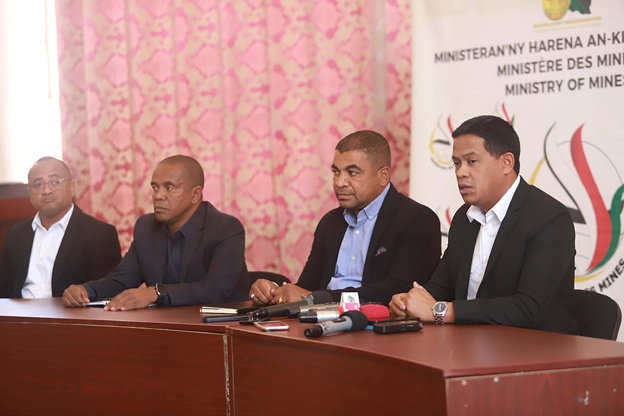
Madagascar is tightening oversight of gold mining in the Betsiboka region as part of a wider effort to formalise the sector and bring gold production and trade more firmly under the country’s legal framework. The Ministry of Mines and Strategic Resources recently conducted a second inspection operation since the mining-sector reorganisation began in May 2026, targeting unauthorised mining activities and the use of equipment without the required permits. Officials inspected miners, gold collectors, permit holders, buying offices and other actors in the gold trade, with authorities warning that unauthorised heavy equipment, including bucket dredges, can be impounded. The operation follows earlier government efforts in Betsiboka to educate artisanal miners and gold collectors about their legal obligations and improve the traceability of gold. L’Express de Madagascar reported that authorities are seeking to ensure that gold mining generates greater benefits for local communities and populations.
The measures form part of a broader framework established by Madagascar’s revised Mining Code, which places greater emphasis on state and local-government participation in mining governance, formalisation of the gold sector, responsible gold supply chains and local economic content. The legislation gives the Centrale de l’Or de Madagascar responsibility for formalising, monitoring and regulating gold activities, while the legal framework also provides for the tracking of gold production and movement through the supply chain. In August, the Ministry of Mines and the Central Gold Office continued this work in Antanimbary in Betsiboka, where officials discussed permits, gold traceability, royalties and specific mining taxes with artisanal miners and collectors. The government also announced plans to introduce mechanisms for collecting certain royalties and taxes at source. L’Express de Madagascar reported that the objective is to bring more gold trading into the legal circuit while improving monitoring of the metal’s circulation.
For Madagascar, the issue extends beyond controlling unauthorised mining. The country is attempting to strengthen its ability to capture economic value from its own mineral resources while bringing artisanal production into a more organised and traceable system. The Mining Code explicitly identifies local content, a social and community mining investment fund and stronger state and decentralised-government roles as elements of the country’s mining policy. It also establishes requirements for artisanal gold production and prohibits the use of mercury, cyanide and other chemical processes in artisanal gold mining. Madagascar’s Mining Code therefore provides the broader context for the current enforcement drive in Betsiboka: the government is seeking not simply to police gold extraction, but to formalise the value chain, improve traceability and increase the economic returns of mineral resources to Madagascar and its communities.





