
Somalia and UNESCO Race to Preserve the Nation’s Endangered Historical Archives
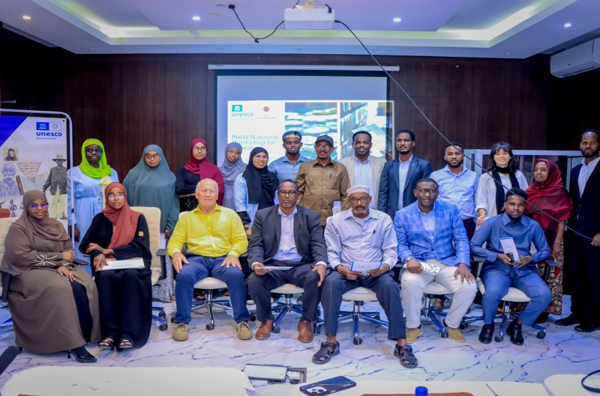
Somalia has officially launched a strengthened cultural preservation initiative in partnership with UNESCO, backed by Japan’s Funds-in-Trust programme, aimed at safeguarding the country’s fragile and irreplaceable documentary heritage from the compounding threats of physical decay, inadequate archival infrastructure, and the accumulated damage of decades of civil conflict. The programme brings together government representatives, cultural specialists, archivists, and international stakeholders in a coordinated effort to prevent what would constitute an unrecoverable loss: the disappearance of the primary records through which Somalia’s modern political, cultural, and social history can be known, studied, and transmitted to future generations. To describe it as a preservation project is technically accurate but undersells what is at stake — this is a nation attempting to recover the thread of its own memory before circumstances make that recovery impossible, and choosing to do so now, while that possibility still exists.
A central focus of the programme is the preservation, restoration, and digitisation of archival materials held by Radio Mogadishu — rare audio recordings, broadcasts, and documentary collections dating back to 1951 that contain within them the acoustic memory of key political transitions, cultural moments, and social transformations that shaped modern Somalia. Experts are assessing these collections for potential nomination to UNESCO’s Memory of the World Programme, which recognises documentary heritage of outstanding global significance and mobilises international resources for its long-term protection and accessibility. Beyond the radio archives, the initiative addresses broader vulnerabilities in Somalia’s documentary holdings: the physical degradation of paper records, the loss of context that accompanies undocumented collections, and the absence of trained archival professionals capable of managing preservation at institutional scale. Each of these is a dimension of the same structural challenge — that the institutions needed to protect Somalia’s historical record have never been adequately built or funded.
For the Pan-African conversation about cultural sovereignty and the right of peoples to their own histories, Somalia’s archival preservation initiative carries significance that extends far beyond document management. Across the continent, the loss of documentary heritage — through war, neglect, colonial confiscation, or simple institutional failure — has systematically weakened the foundations on which national identity, historical consciousness, and civic culture are built. Communities that cannot access verified historical records are more vulnerable to the manipulation of their pasts by those with the power to construct alternative narratives. Somalia’s determination to restore its archival foundations — establishing a national coordination committee, pursuing international recognition for its documentary heritage, and building the institutional infrastructure for long-term preservation — is therefore an act of sovereignty as much as scholarship. It is a statement that Somalia intends to be the author of its own history, and that the materials needed to write that history truthfully will not be allowed to disappear.





