
Small Island, Big Vision: Comoros Charts a Path Toward Economic Sovereignty in a Multipolar World
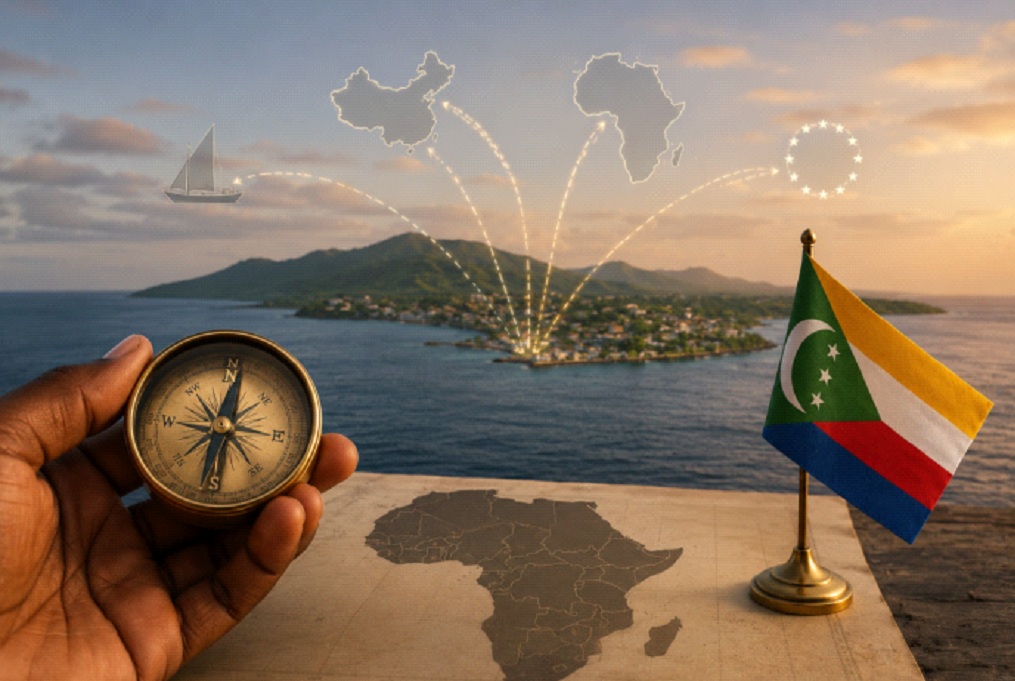
For decades, many African economies have operated within a global system where access to capital, infrastructure financing, and international markets was often shaped by institutions and power centers far beyond the continent’s control. As discussions on China-Africa cooperation continue to evolve, Comorian economist and political analyst Maoulana Charif has pointed to the opportunities that deeper engagement with China could create for the Comoros, particularly in investment, trade, and infrastructure development. For the island nation, the conversation is not simply about relations with a major global power; it is about expanding the range of options available to a country seeking greater control over its own economic future in an increasingly multipolar world.
The appeal of these partnerships lies in their potential to address long-standing development challenges. Like many small African economies, Comoros faces structural constraints linked to limited industrial capacity, infrastructure gaps, and dependence on external economic flows. Greater cooperation with emerging economic partners offers the possibility of diversifying sources of investment and accelerating projects that can strengthen productive sectors and improve connectivity. While African governments continue to navigate complex geopolitical competition, many are increasingly focused on ensuring that international engagement delivers tangible benefits for local populations rather than reinforcing patterns of extraction and dependency that have historically constrained development across the continent.
For Pan-African thinkers, the significance of this shift extends beyond any single partnership. The growing ability of African states to engage multiple global actors reflects a broader effort to expand strategic autonomy and strengthen economic sovereignty. The challenge is not replacing one external partner with another, but leveraging international relationships to advance African priorities, build domestic capacity, and create more balanced terms of engagement. In that context, the opportunities highlighted in Comoros point toward a wider continental aspiration: an Africa capable of negotiating its place in the global economy from a position of confidence, cooperation, and self-determined development rather than inherited dependency.


