
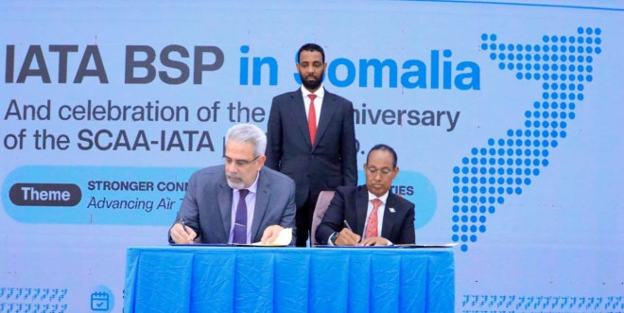
Somalia Adopts International Aviation Safety Standards Through IATA Agreement
Somalia has taken a step towards strengthening aviation safety by signing an agreement with the International Air Transport Association (IATA). On October 18, 2026, Somalia’s Ministry of Transport and Civil Aviation and its Civil Aviation Authority signed a memorandum of understanding with IATA in Mogadishu. According to Hiiraan Online’s report, the agreement recognises two internationally used audit programmes as acceptable ways to demonstrate compliance with national regulations. The programmes cover airline operations and airport ground-handling services. This move forms part of IATA’s Focus Africa initiative, which promotes aviation safety, infrastructure and connectivity across the continent. Importantly, Somalia’s aviation authority will retain its own regulatory and safety oversight responsibilities. The agreement supports its work rather than transferring that responsibility to IATA.
The agreement covers the IATA Operational Safety Audit (IOSA) and the IATA Safety Audit for Ground Operations (ISAGO). IOSA assesses airlines’ operational management and control systems. ISAGO focuses on ground-handling companies that manage services such as aircraft turnaround and baggage handling. As APA News explains, the agreement also supports efforts to promote consistent, internationally recognised audit standards across Africa. These programmes can help operators identify risks, improve procedures and reduce duplication between audits. However, recognising the programmes does not mean that every airline or ground-handling company in Somalia automatically meets their requirements. Operators must still satisfy the relevant standards, while the Somali Civil Aviation Authority continues to oversee compliance with national regulations. Effective implementation will therefore matter as much as signing the agreement.
Somalia continues to rebuild its civil aviation system after decades of disruption following the collapse of the central government in 1991. Stronger safety oversight can help protect passengers, improve operational practices and support confidence in the country’s aviation sector. It may also help Somali operators work more effectively with international aviation partners. As Goobjoog English reports, the agreement forms part of broader cooperation to improve aviation safety in Somalia and across Africa. Better standards could support regional connectivity and create a stronger foundation for trade and business travel. Still, the agreement alone cannot guarantee safer operations or increased air traffic. Somalia will need consistent enforcement, qualified personnel and continued investment in its aviation institutions. The real measure of progress will be how effectively these standards improve safety and oversight in practice.





