
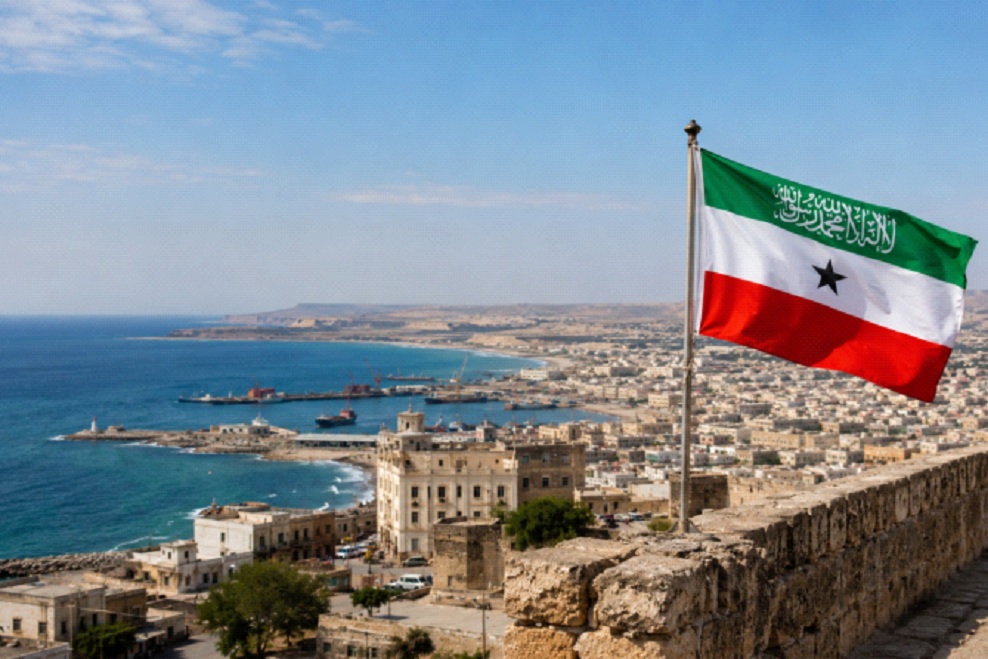
Somaliland’s Israeli Overture Reshapes the Horn of Africa’s Map
The possibility of closer security cooperation between Somaliland and Israel — signaled during President Abdirahman Mohamed Abdullahi’s visit to Jerusalem, which followed Israel’s recognition of Somaliland’s independence — has drawn renewed attention to the geopolitical significance of the Horn of Africa and the intensifying competition for influence along the Red Sea corridor. Somaliland’s openness to discussions about an Israeli military presence introduces a new external actor into an already crowded strategic environment, one where Turkey, the UAE, Ethiopia, and several other powers have already established footholds through port agreements, security partnerships, and economic relationships. Situated near the Bab el-Mandeb Strait — a maritime chokepoint through which a significant share of global trade transits daily — Somaliland occupies geography whose value external powers have been willing to pay considerable political and financial prices to access.
From a territorial sovereignty perspective, the development illuminates the complex interplay between recognition, legitimacy, and strategic value that defines Somaliland’s international situation. Having operated its own institutions, government, and security structures since declaring independence in 1991, Somaliland has been building the substance of statehood for more than three decades without the form — the international recognition that would convert its de facto independence into de jure standing within the global order. Israel’s recognition, however calculated, provides a crack in that isolation. Somalia continues to regard Somaliland as part of its sovereign territory and views external engagement with Hargeisa as a direct challenge to its constitutional integrity. The resulting dispute sits at the intersection of competing recognition claims, regional power dynamics, and the growing importance of the Red Sea corridor in global geopolitics.
The broader implications for African regional integration and stability are significant. The Horn of Africa has become an increasingly contested geopolitical space where external powers seek influence through ports, military facilities, trade corridors, and bilateral security partnerships whose terms are negotiated with individual entities rather than through regional frameworks. As new alliances emerge, the challenge for African institutions becomes one of ensuring that the continent’s most strategically important geography is governed in ways that serve African security interests rather than becoming a theatre for external competition conducted over African heads. Somaliland’s situation — where sovereignty claims, strategic geography, and external recognition interact in ways that none of the current frameworks for African governance are fully equipped to resolve — illustrates the urgent need for African institutions to develop more sophisticated approaches to managing recognition, security partnerships, and territorial disputes before external actors define those outcomes by default.





