
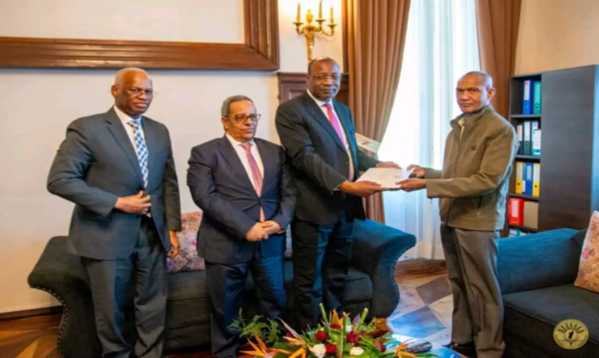
South–South Governance: Mauritania and Madagascar Demonstrate That African States Can Learn From Each Other
The bilateral working exchange between Mauritania and Madagascar on public administration modernisation—conducted through the framework of formal diplomatic engagement between Minister of Livestock Sid Ahmed Ould Mahmoud and Malagasy authorities within the Ministry of Public Service—is a modest but meaningful instance of the kind of South–South institutional learning that development theory has long recommended but that African diplomatic practice has historically underprioritised relative to North–South technical assistance relationships. The visit’s focus on public sector management efficiency, service delivery improvement, digital transformation, and civil servant capacity building reflects a shared recognition that governance quality is not a fixed endowment but a set of institutional capabilities that can be developed through deliberate reform, and that the experience of peer countries navigating similar challenges can provide insights that consulting firms and international development organisations cannot.
The discussions’ substantive content—exchanging experiences on service coordination, digital transformation in government administration, and human resource systems—addresses challenges that both countries share and that have no single correct solution, making peer learning through direct institutional exchange more practically valuable than prescriptive technical assistance from external advisors who may not share the political, cultural, and resource constraints within which African public administrations operate. Madagascar’s ongoing institutional performance reforms and Mauritania’s interest in adopting practical governance tools that improve citizen-facing service delivery reflect the kind of mutual learning dynamic that is possible when African institutions approach each other as peers with relevant experience rather than as potential recipients or donors of technical knowledge.
The conclusion of both delegations’ discussions with a commitment to strengthen South–South cooperation and sustain regular institutional dialogue reflects an aspiration that has been central to Pan-African development thinking since the earliest days of continental organisation: that Africa’s collective governance capacity can be enhanced through the systematic sharing of institutional experience among its member states, reducing dependence on external frameworks whose assumptions may not align with African governance realities. Whether this particular exchange translates into a sustained institutional partnership will depend on the follow-through that both governments commit to beyond the diplomatic formalities of the visit. But its premise—that African states have accumulated governance experience worth sharing with each other, and that the structures for doing so can be built through ordinary bilateral diplomacy—is a claim worth making and a practice worth building.





