
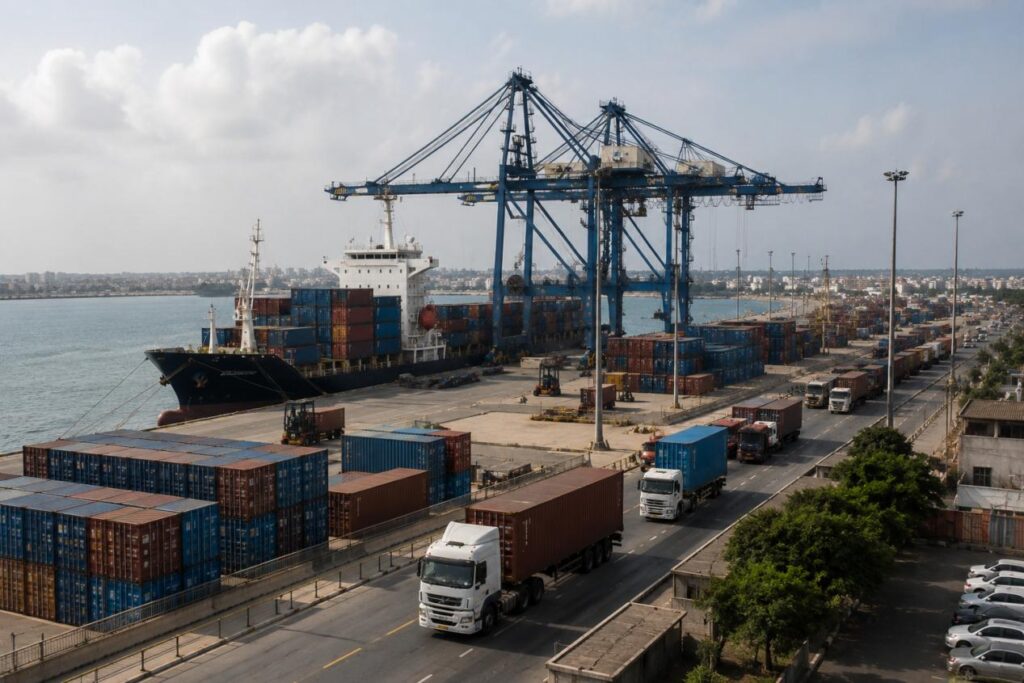
What Togo’s Port Reveals About The New Geopolitics Of West Africa
The reported arrival of the Russian cargo vessel Mikhail Britnev at the Port of Lomé is ultimately significant not because of the cargo itself, but because of what it reveals about the growing geopolitical importance of African-controlled infrastructure. For decades, discussions about security and influence in Africa have largely focused on foreign powers, military alliances, and external interventions. Yet the ability to shape regional outcomes increasingly depends on something more fundamental: control over the ports, transport corridors, and logistics networks that connect economies and states. In this regard, Togo’s strategic location on the Gulf of Guinea has transformed the Port of Lomé into far more than a commercial facility. It has become an asset capable of influencing trade flows, regional connectivity, and the movement of strategic goods across West Africa.
The development highlights a broader shift in the continent’s political economy. As the Sahel undergoes profound security and geopolitical changes, coastal infrastructure is becoming an increasingly important bridge between global markets and inland states. Countries that possess efficient ports and logistics systems are gaining new forms of leverage because they occupy critical positions within regional supply chains. The attention surrounding Lomé therefore reflects a wider reality: infrastructure is becoming a source of influence in its own right. Whether facilitating trade, supporting regional integration, or serving as a gateway to landlocked neighbors, strategic infrastructure is allowing African states to exercise greater agency in shaping their relationships with external partners and regional actors alike.
More broadly, the episode demonstrates that Africa’s future influence may depend as much on connectivity as on resources. In an increasingly competitive international environment, states that control key maritime gateways and transport corridors are likely to play a greater role in determining the direction of regional development and cooperation. The significance of the Port of Lomé lies not in its association with a single shipment but in what it represents: the growing recognition that infrastructure is a strategic instrument of national development, regional integration, and sovereign decision-making. For Togo, the challenge is to convert this strategic relevance into long-term economic and political gains while ensuring that its infrastructure serves national priorities rather than external agendas.





