
Sudan Prioritizes Infrastructure Rehabilitation and Power Grid Interconnection
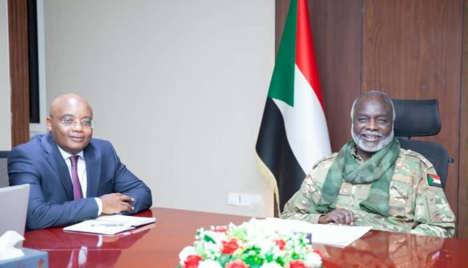
Sudan’s sovereign recovery strategy has entered a critical operational phase, with national authorities shifting focus toward infrastructure restoration, essential service delivery, and productive sector revitalization. Primary economic reporting published by Sudan Horizon details that Minister of Finance and National Economy Dr. Jibril Ibrahim met with a senior delegation from the African Development Bank (AfDB) on September 14, 2026, in Port Sudan. The bilateral dialogue centered on aligning the AfDB’s development portfolio with Sudan’s national reconstruction priorities—specifically directing financial resources toward rebuilding damaged logistics corridors, restoring basic services, and stimulating agricultural and industrial output to anchor long-term economic stability.
Energy infrastructure rehabilitation stands at the forefront of Sudan’s immediate reconstruction pipeline, following widespread conflict-related damage to national generation plants, transformers, and distribution networks. Cross-border electricity interconnection capacity from Egypt to Sudan was officially increased to 75 megawatts in September 2026, following technical agreements between Minister of Energy Al-Mutasim Ibrahim Ahmed and Egyptian Minister of Electricity Dr. Mahmoud Esmat. The expanded supply directly feeds the Northern State to stabilize power grids for agricultural irrigation and residential needs. Furthermore, both governments have committed to accelerating Phase II of the interconnection project—aiming to scale capacity to 300 MW and eventually 1,000 MW via a double-circuit transmission line connecting Toshka 2 in Egypt to Wadi Halfa in Sudan—while expanding solar and wind energy deployments to diversify the national energy mix.
The broader macroeconomic environment presents a complex path forward, marked by cyclical rebound attempts alongside profound structural damage. Analytical assessments published in the African Development Bank 2026 Sudan Country Focus Report highlight signs of modest economic recovery—with GDP growth rebounding to 1.2 percent in 2025 and projected at 2.1 percent in 2026—supported by localized reconstruction and agricultural activity. However, comprehensive socio-economic evaluations conducted by UNDP Sudan warn that the conflict has effectively set per capita incomes back to 1990s levels, with per capita GDP falling to thresholds not seen since 1992. Rebuilding physical infrastructure, expanding bilateral energy connections, and mobilizing domestic development financing remain central to reversing these losses and securing Sudan’s long-term economic sovereignty.





