
Sudan’s Infrastructure Strikes and the Mounting Cost of Modern Conflict
The drone strike on a shelter camp for displaced persons in El Obeid — killing two people and injuring seventeen others including nine children, according to North Kordofan state authorities — is the latest in a pattern of violence whose military logic, if any such logic exists, is consistently indistinguishable from the logic of making civilian life impossible. The strike occurred alongside a series of attacks targeting electricity and fuel infrastructure in the same area, connecting the violence against displaced persons to a wider campaign against the physical systems that sustain daily existence in western Sudan. Electricity and water, food distribution and healthcare, humanitarian corridors and the organisations that staff them — these are not incidental targets caught in the crossfire of a military contest; they are the essential infrastructure of a population’s survival, and their systematic disruption is itself a form of warfare against the conditions that make civilian resilience possible.
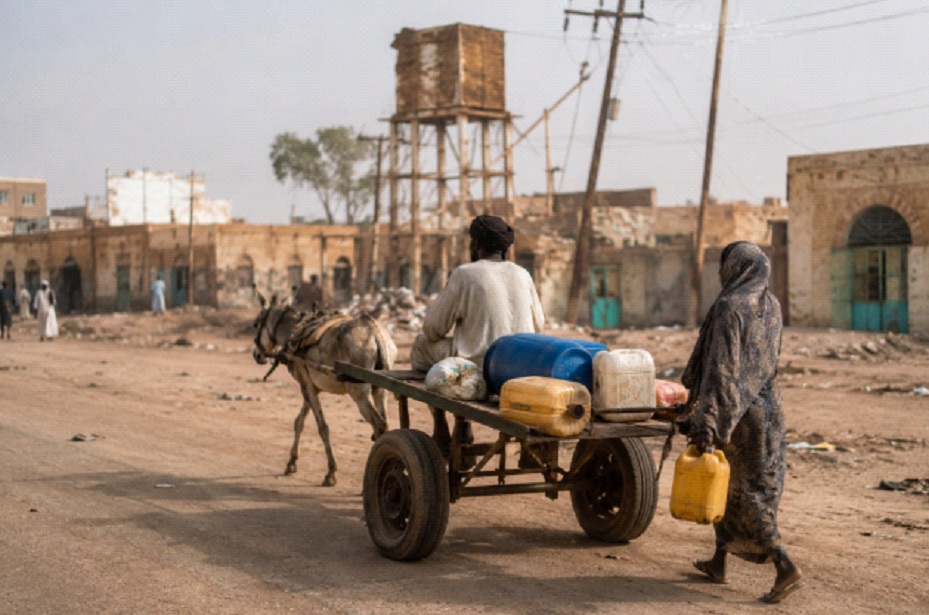
The consequences compound with a logic that disaster preparedness planners know well but military analysts too rarely integrate into their assessments. Damage to El Obeid’s electricity infrastructure has disrupted water pumping systems across the city, forcing residents already living in conditions of displacement and financial precarity to source water through expensive delivery systems while aid organisations warn of escalating cholera risk. El Obeid is not merely a local population centre — it is a primary logistics hub for humanitarian relief operations serving Kordofan and parts of Darfur, meaning that disruption to its infrastructure cascades outward into supply chains that support communities the attacked city has never directly housed. The economic and humanitarian geography of the strike therefore extends far beyond the physical location of the damage, illustrating how modern conflict in heavily interdependent social systems generates consequences whose geographic radius consistently exceeds the military calculation that produced them.
Sudan’s crisis demonstrates that the most consequential dimension of modern warfare is increasingly not the contest between armed forces but the contest for civilian resilience — the capacity of communities to continue functioning, accessing essential services, and maintaining social cohesion under conditions of deliberate destruction. Protecting electricity, water systems, and humanitarian corridors has become central to preserving the human security that is both an end in itself and the foundation of any future recovery. For Sudan, reducing civilian suffering requires not only ending violence but also making the explicit, enforceable, and internationally monitored commitment that infrastructure serving civilian populations will not be targeted — a commitment whose absence, and the international community’s tolerance of that absence, is itself one of the war’s most consequential ongoing features.


