
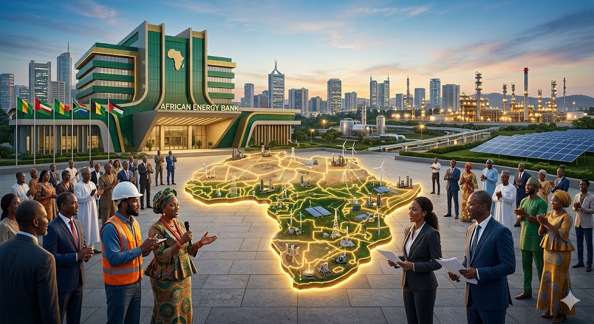
How the African Energy Bank Is Reclaiming the Continent’s Right to Finance Its Own Future
Africa is preparing to take one of its most consequential steps toward genuine economic sovereignty with the imminent launch of the African Energy Bank — a continent-backed financial institution expected to begin operations by the end of July 2026. Headquartered in Abuja, Nigeria, the bank emerges from a structural reality that has constrained African development for decades: the chronic failure of international financial institutions to adequately fund African energy infrastructure on terms that respect the continent’s developmental priorities. With an initial capital base of $500 million set to grow to $2 billion within a year, the institution will finance oil and gas exploration, refining, gas-to-power projects, regional pipelines, and integrated energy infrastructure across the continent. For the Secretary General of the African Petroleum Producers’ Organization (APPO), Farid Ghezali, the bank is not merely a financial mechanism — it is a declaration that African countries will no longer accept being denied the tools to develop their own resources on their own terms.
The timing is deliberate and the context urgent. Many international lenders — responding to climate pressures from Northern constituencies — have dramatically reduced investments in African fossil fuel projects, creating a financing gap that strikes hardest at the communities most in need of industrialisation, reliable electricity, and economic growth. The African Energy Bank’s mandate directly challenges this dynamic by asserting that African nations must retain the sovereign right to determine their own development pathways, including the use of their hydrocarbon endowments for domestic industrialisation rather than raw export. Backed by Algeria, Nigeria, Egypt, Ghana, Angola, and Côte d’Ivoire, the bank also signals a new phase of intra-African financial cooperation — one in which major continental economies pool resources and influence to build institutions powerful enough to set their own conditions rather than navigate those set by others.
The broader significance of the African Energy Bank extends into the heart of the Pan-African development debate. Flagship cross-border projects such as the Trans-Saharan Gas Pipeline — long promoted as symbols of intra-continental cooperation — have consistently stalled for lack of credible, Africa-anchored financing. The bank’s creation could change that equation, providing the institutional backbone that turns regional energy ambitions into operational infrastructure. More fundamentally, it is a challenge to the assumption embedded in decades of development finance that Africans must seek external permission and external capital to develop African resources. Under Agenda 2063, the continent envisions a self-financing development model built on African institutions, African capital, and African decision-making. The African Energy Bank is one of the most tangible expressions yet of that vision — and one of the clearest signals that Africa is building the architecture of sovereignty piece by institutional piece.





