
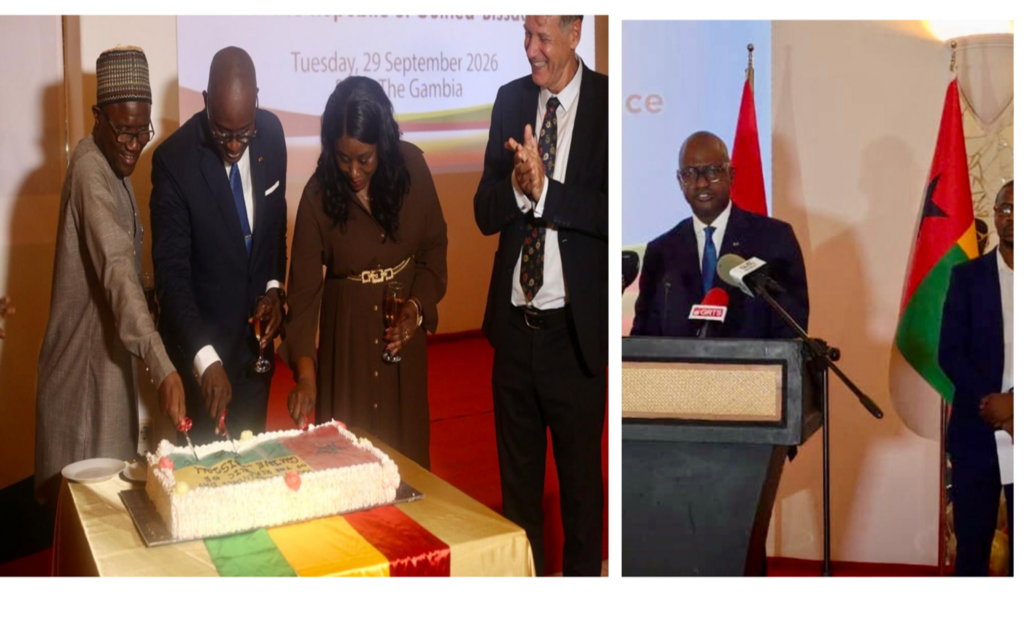
The Gambia and Guinea-Bissau Commemorate 53 Years of Liberation: West African Neighbors Expand Bilateral Trade, Energy, and Cross-Border Security
The Gambia and Guinea-Bissau commemorated the 53rd anniversary of Guinea-Bissau’s national independence on September 29, 2026, in Banjul, utilizing the historic occasion to strengthen bilateral cooperation rooted in shared anti-colonial resistance. Speaking on behalf of President Adama Barrow, Minister of Communications and Digital Economy Lamin Jabbi highlighted the enduring solidarity between both nations, recalling the historic contributions of Gambian citizens who supported and fought alongside the African Party for the Independence of Guinea and Cape Verde (PAIGC) during the liberation struggle against Portuguese rule. As detailed in official dispatches published by The Point Newspaper, the diplomatic gathering reaffirmed that relations between Banjul and Bissau extend far beyond formal protocol, driven by deep-rooted family ties, cross-border trade, and continuous community mobility.
This historic relationship has increasingly shifted into a results-oriented operational partnership following the Fourth Gambia–Guinea-Bissau Joint Commission and high-level presidential consultations. Both governments have established concrete frameworks to remove trade barriers, accelerate private sector investment, and streamline cross-border movement across essential sectors including agriculture, fisheries, tourism, health, education, and digital infrastructure. Shared developmental goals are also being realized through sub-regional energy and water projects, most notably through joint initiatives managed under the Gambia Basin Development Organization (OMVG) alongside member states Senegal and Guinea to ensure long-term energy security and agricultural irrigation.
Sub-regional security collaboration remains a vital pillar of the bilateral partnership as both West African nations enhance intelligence sharing and administrative coordination to address cross-border security challenges. By maintaining institutional coordination through regional bodies like ECOWAS, The Gambia and Guinea-Bissau are actively demonstrating how historical anti-imperialist bonds can be converted into practical, contemporary mechanisms for economic integration and collective self-reliance. As corroborated in regional integration updates monitored by the African Union Commission, this deepening West African alliance provides a concrete contribution toward fulfilling the broader continental goals of sovereign development and unity across the Global South.





