The New Geopolitics Of Space: Mauritius’ Artemis Accords Decision Reflects Africa’s Growing Role In Shaping The Final Frontier
Mauritius’ accession to the Artemis Accords represents more than a commitment to peaceful space exploration; it reflects Africa’s gradual emergence as a stakeholder in one of the world’s fastest-evolving geopolitical and technological arenas. By becoming the seventh African country to join the framework, Mauritius has aligned itself with an international initiative that seeks to establish norms for cooperation in lunar exploration and the broader use of outer space. At a time when space has become an arena of strategic competition, economic opportunity and technological innovation, the decision demonstrates that smaller African states are increasingly seeking a voice in shaping the rules that will govern humanity’s next frontier rather than remaining passive observers of global technological change.
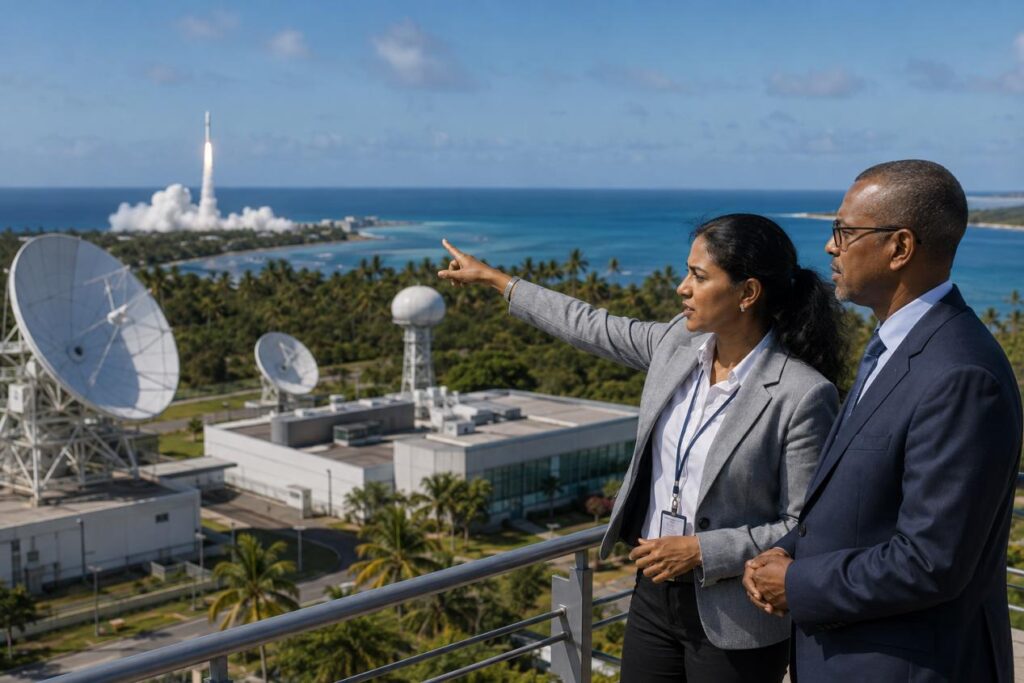
The significance of the move extends well beyond astronomy or scientific collaboration. Space infrastructure now underpins critical sectors ranging from telecommunications and climate monitoring to maritime security, disaster response and economic planning. For Mauritius, whose economy and security are closely linked to the Indian Ocean, deeper engagement in international space cooperation has the potential to strengthen national resilience while expanding opportunities for research, innovation and high-value industries. More broadly, the decision illustrates a growing recognition across Africa that technological capability is becoming an increasingly important dimension of sovereignty, enabling states to participate more effectively in global governance and reduce dependence on external providers of strategic technologies.
Mauritius’ decision also raises broader questions about Africa’s place in the governance of emerging global commons. As international competition expands beyond land and sea into cyberspace and outer space, African countries face the challenge of ensuring that their interests are represented in the institutions and partnerships that define future technological development. Rather than viewing space solely through the lens of major powers, Mauritius’ accession highlights a continental shift toward proactive engagement with global innovation ecosystems. If accompanied by sustained investment in science, education and regional cooperation, such initiatives could help position Africa not merely as a beneficiary of space technologies but as an active contributor to the policies, partnerships and scientific advances that will shape the future of space exploration.