
The Sahel Breathes Together: AES Nations Unite Around Climate Sovereignty and Environmental Resilience
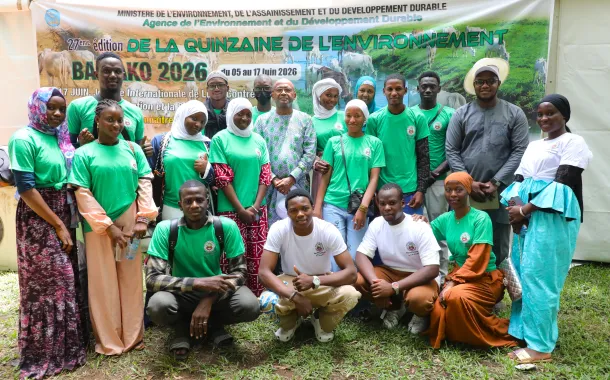
Bamako became a focal point for regional environmental cooperation as Mali launched the 27th edition of its Environment Fortnight — bringing together government officials, civil society organisations, development partners, and ministerial representatives from Burkina Faso and Niger under themes focused on climate resilience, combating desertification, and strengthening the communities most exposed to environmental stress. That ministers from two fellow members of the Confederation of Sahel States stood alongside Malian officials at the opening reflects more than courtesy: it signals a growing determination within the AES bloc to treat environmental governance as a dimension of the same sovereign project that has driven its security and economic integration. In a region where land degradation, drought cycles, and advancing desertification are among the most immediate daily threats facing millions of families, climate resilience is not a technical sub-topic of development policy. It is one of the defining material conditions of survival itself.
The participation of UNESCO alongside regional governments underscored the initiative’s ambition to link awareness and education to institutional capacity and locally driven solutions. With climate change, erratic rainfall, and desertification threatening agricultural livelihoods, water security, and economic stability across the Sahel, the emphasis on community-level action is grounded in the recognition that national policy frameworks cannot function without the active engagement of the populations most directly affected. Local farmers, pastoralists, women’s organisations, and youth networks possess knowledge about their landscapes, their seasons, and their resources that no external expertise can replicate — and their participation in designing environmental responses is not merely a matter of inclusivity but a condition of effectiveness. The Environment Fortnight represents a platform through which that knowledge can be activated in service of a regional environmental strategy with genuine community ownership at its centre.
Beyond its immediate environmental goals, the initiative carries a political significance that its organisers clearly understand. As the Confederation of Sahel States deepens cooperation across security, economic, and diplomatic domains, climate resilience is emerging as a strategic pillar of regional integration whose importance will only intensify as environmental pressures escalate. The joint presence of AES ministers in Bamako is therefore a statement of shared purpose: that the environmental challenges confronting the Sahel cannot be addressed in isolation, that sovereignty and ecological stewardship are inseparable rather than competing priorities, and that the countries most exposed to climate change are building — together and on their own terms — the institutions and strategies needed to protect their peoples’ futures. In an era when much of the global climate finance architecture operates in ways that preserve Northern institutional control over Southern environmental priorities, the Sahel states’ assertion of collective environmental agency is itself a form of sovereignty.


