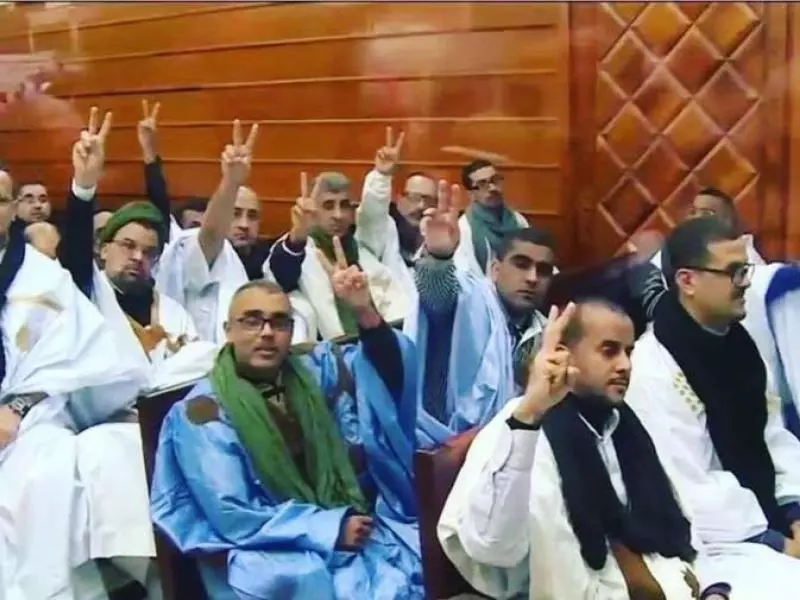
Tortured and Convicted: The UN’s Indictment of Morocco Over Sahrawi Prisoners Demands Global Accountability
The United Nations Committee Against Torture has done more than issue a diplomatic rebuke — it has produced a formal indictment of a pattern. In reaffirming allegations of systematic torture, arbitrary imprisonment, and the use of coerced confessions against Sahrawi political detainees linked to the Gdeim Izik protest camp, the committee has placed on record what Sahrawi human rights defenders, journalists, and activists have documented for over a decade: that the repression of Sahrawi political life in the occupied territories operates not through isolated incidents of state excess, but through institutional methodology. The Sahrawi National Human Rights Commission reported that the UN body called on Morocco to review and annul the convictions of the complainants, guarantee unrestricted access to legal representation, medical care, and family contact, and answer for what the commission described as Morocco’s continued failure to honour its obligations under international human rights law.
The committee’s findings place particular weight on what they reveal about the broader governance of the occupied territories. Sahrawi activists, students, journalists, and human rights defenders have consistently reported a climate of intimidation, surveillance, retaliation for political expression, and systematic obstruction of independent human rights monitoring. The ICRC and UN human rights bodies have been called upon to intervene with greater decisiveness, including demanding the immediate and unconditional release of Sahrawi political prisoners. Morocco’s status as a signatory to the relevant international conventions makes the gap between its treaty obligations and documented practice not merely a political embarrassment but a legal accountability issue — one that the international community has permitted to persist for too long through a combination of geopolitical calculation, economic interest, and the subordination of Sahrawi rights to regional stability frameworks that do not require Morocco to change its behaviour.
The Western Sahara question is one of the last unresolved colonial territories on the African continent, and the treatment of Sahrawi political prisoners sits at the intersection of international human rights law, the right to self-determination, and the long overdue demand for decolonial accountability in Africa. For the African Union and Pan-Africanist movements, the issue is not peripheral — it is a direct test of whether the continent’s institutional commitment to sovereignty and dignity extends to a people whose territory was never decolonised and whose political prisoners continue to suffer consequences for demanding what the African Union’s own foundational principles guarantee them. The UN Committee’s findings must translate into sustained international pressure, legal accountability, and a genuine political process — not another decade of diplomatic deference to a status quo built on occupation and enforced silence.