
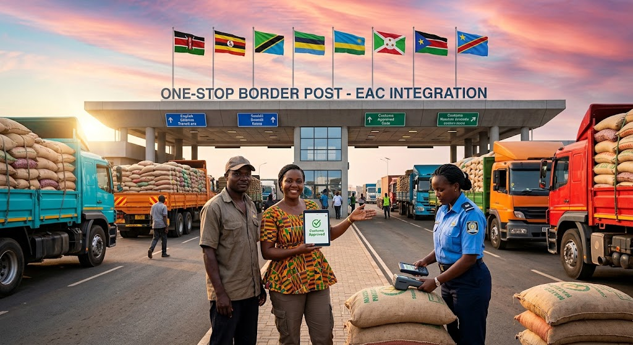
Unlocking Agrarian Potential; Regional Trade Pact Fast-Tracks Mutual Recognition Agreements to Scuttle Border Bottlenecks
In a decisive move to bolster continental food security and accelerate economic integration, East African trade bodies and policy makers have launched a major push to eliminate the persistent non-tariff barriers (NTBs) that currently cripple cross-border agricultural commerce. Championed by the Intergovernmental Authority on Development (IGAD) in close coordination with the African Continental Free Trade Area (AfCFTA) Secretariat, member states are fast-tracking the implementation of landmark Mutual Recognition Agreements (MRAs) designed to create seamless, predictable regional supply chains. According to an extensive report published by The Standard, these frameworks will mandate that accredited food testing, inspection, and sanitary certification conducted in an exporting nation are automatically recognized upon entry into partner states. By eliminating duplicate laboratory testing and long border delays, the initiative directly targets the systemic post-harvest losses and inflated freight costs that have historically prevented local farmers from competing in the multi-billion-dollar regional market.
The urgency driving these regulatory reforms stems from the stark contrast between East Africa’s agricultural capacity and its actual internal trade volume. Despite the regional economy being valued at over $350 billion, intra-regional trade accounts for a mere fraction of total commerce—a structural deficit driven by protectionist permits, unharmonized standards, and redundant border inspections. Recent trade policy briefings covered by Citizen Digital highlight warnings from the East African Business Council (EABC) that uncoordinated standards act as an artificial drag on regional development, forcing nations to rely on costly food imports from outside the continent. The new MRA framework directly addresses these vulnerabilities by establishing a standardized, reciprocal quality assurance network. Speaking on the significance of this shift, Kenya’s State Department of Agriculture Director of Policy Kennedy Anahinga stressed that harmonizing certification systems is not merely an administrative exercise, but a vital trade facilitation agenda that directly safeguards livelihoods, creates youth employment, and builds resilient food systems across the Horn and East Africa.
This push to dismantle non-tariff barriers represents a foundational pillar for true Pan-African economic self-reliance under the broader AfCFTA framework. As documented in a parallel analysis on regional trade bottlenecks by Business Insider Africa, previous policy friction—such as permit delays affecting cross-border dairy and grain movements—demonstrated how regulatory divergence actively undermines regional integration. By replacing fragmented national controls with mutual trust and synchronized digital customs clearance, East African nations are establishing a sovereign blueprint for agricultural trade. Moving forward, converting these technical agreements into permanent border realities will guarantee that smallholder farmers and agro-processors can feed growing urban centers, stabilize regional food prices, and retain agricultural wealth within the continent.





