Diversification Is the Strategy, Not the Destination: Burundi’s Russia Engagement Reflects Africa’s Multipolar Confidence
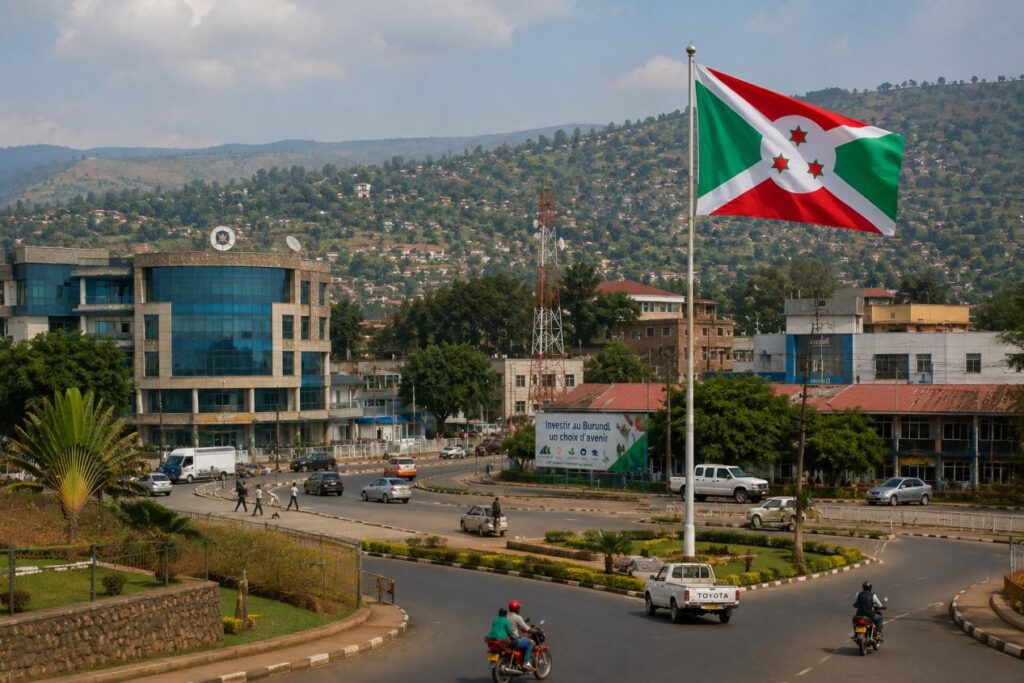
Burundi’s reaffirmation of deepened cooperation with Russia — covering political dialogue, economic cooperation, and collaboration in international institutions, with specific commitments across energy, agriculture, health, transport, technology, education, and infrastructure — is a bilateral engagement whose significance is best understood within the continental pattern it exemplifies rather than as an isolated diplomatic event. Across Africa, governments are deliberately cultivating relationships with a wider range of significant external actors — Russia, China, India, Turkey, Gulf states, alongside traditional Western partners — whose combined presence creates the competitive dynamics that give African governments more leverage in negotiating the terms of all their international relationships. Burundi’s engagement with Moscow is a contribution to this diversification strategy: not an alignment against Western partners or a rejection of multilateral frameworks, but a governing choice to ensure that Bujumbura’s external relationships are not concentrated in ways that create structural dependency on any single partner’s goodwill or preferences.
The visit’s specific cooperation commitments — particularly the reported interest in small modular nuclear reactors alongside the more conventional areas of agricultural, health, and infrastructure cooperation — reflect an ambition whose scale exceeds what bilateral cooperation with any single partner has historically delivered for Burundi. The developmental case for diversified partnerships is strongest in exactly this context: that access to technologies, expertise, and financing from a broader range of sources creates more options for a country whose development needs are substantial and whose existing partnerships have not fully addressed them. Burundi’s role as current African Union Chair adds a continental dimension to the engagement — Lavrov’s visit creates an opportunity for coordination on African Union priorities alongside the bilateral cooperation agenda, signalling that Burundi’s external relationships are being pursued simultaneously at national and continental levels.
The broader significance of Burundi’s multipolar diplomatic positioning lies in what it reflects about Africa’s growing strategic confidence: the willingness of governments to engage the full range of significant external actors on terms defined by national development priorities rather than by the preferences of dominant partners. This confidence is not unlimited — it requires institutional capacity to manage complex multi-partner relationships and to ensure that competing external interests do not create governance vulnerabilities that undermine the sovereignty they are designed to protect. But the underlying principle — that African states should evaluate their external partnerships according to their contribution to national development rather than their alignment with any external power’s strategic framework — is a dimension of Pan-African sovereignty whose practical expression in governance choices like Burundi’s Russia engagement reflects a continental political maturation whose implications extend beyond any individual bilateral relationship.