Sahrawi Republic Elected Vice-Chair for North Africa on Social and Behaviour Change Communication
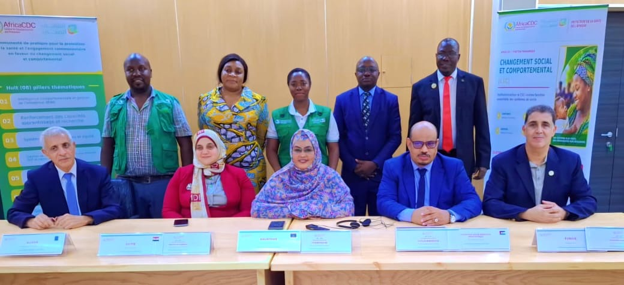
The Sahrawi Arab Democratic Republic (SADR) has achieved a significant diplomatic and public health milestone after being officially elected as Vice-Chair representing the North Africa region within the Social and Behaviour Change Communication (SBC) Community of Practice (CoPA). Announced by the Sahara Press Service, the election took place during a high-level regional workshop convened in the Mauritanian capital of Nouakchott. The gathering brought together delegations from across the sub-region to establish a structured leadership framework for the North African Regional Team on Social and Behaviour Change Communication.
The Nouakchott summit was convened under the auspices of the Africa Centres for Disease Control and Prevention (Africa CDC) to lay down governance foundations, set thematic priorities, and institutionalize regional health promotion, as detailed in parallel coverage by the Sahara Press Service Regional Desk. Representing the Sahrawi Republic at the assembly was Mr. Hayaye Ahmed Baba Hayaye, Director of Information and Awareness at the SADR Ministry of Public Health. His delegation presented a comprehensive framework detailing the Sahrawi government’s active health communication strategies, emphasizing preventive healthcare, community-level disease monitoring, and the practical application of social change communications to address local health challenges within refugee camps and liberated territories.
Securing the Vice-Chair position reinforces the Sahrawi Republic’s active integration into continental public health governance structures alongside fellow African Union member states. Official reports confirmed through the Sahara Press Service French Service highlight that the newly elected North African regional team will oversee the alignment of health messaging, emergency risk communication, and behavioral interventions across member countries. By assuming this key leadership role, the SADR Ministry of Public Health will directly contribute to shaping sub-regional policy frameworks, enhancing technical cooperation, and driving community engagement initiatives across North Africa through the Africa CDC network.