Somalia and Uganda Sign Labour Deal to Strengthen African Trade
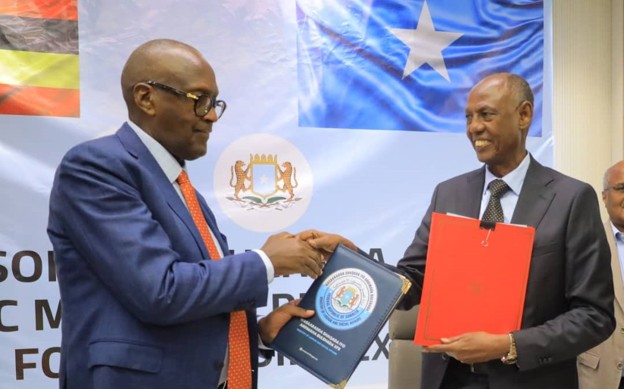
Somalia and Uganda have signed a bilateral labour agreement to protect workers and strengthen economic ties between the two countries. The agreement was signed in Mogadishu on October 22, 2026, during a joint business forum and a review of existing cooperation agreements. Uganda’s Minister of Gender, Labour and Social Development, Henry Tumukunde, signed the deal alongside Somalia’s Minister of Labour and Social Affairs, Prof. Salim Alio Ibro. According to Uganda’s Ministry of Foreign Affairs, the agreement sets rules for fair recruitment, regulated employment and the protection of workers’ rights. It also aims to improve cooperation between the two countries on labour matters. The signing marks a key development in efforts to build stronger economic relations between Somalia and Uganda while addressing concerns about the welfare of citizens working across their borders.
The labour agreement formed part of wider talks on trade, investment, tourism, security, education and transport. The meetings brought together government officials and business representatives to review earlier commitments and identify new areas of cooperation. A 35-member Ugandan delegation joined Somali officials in Mogadishu for the discussions and a joint exhibition. The forum also created opportunities for businesses from both countries to showcase their products, meet potential partners and explore new markets. In its report on the opening of the business forum, Uganda’s Ministry of Foreign Affairs highlighted the need to turn diplomatic relations into practical economic benefits. Both countries also committed to fully establishing a Joint Permanent Investment and Business Council by November 30, 2026. The council is expected to support business partnerships and help address barriers to trade and investment.
The agreement offers an opportunity to link economic growth with better protection for workers. As businesses explore new markets and employers seek skills across borders, clear employment rules can help reduce unfair recruitment and protect workers from abuse. However, signing an agreement is only the beginning. Both governments must put its provisions into practice and ensure that workers can access the protections it promises. The wider business partnership also needs practical results, including stronger trade links, new investment and employment opportunities for young people. For Africa, such cooperation matters because closer economic ties can help countries expand markets and build stronger regional connections. Somalia and Uganda now face the task of turning their commitments into lasting benefits for workers, businesses and communities in both countries.