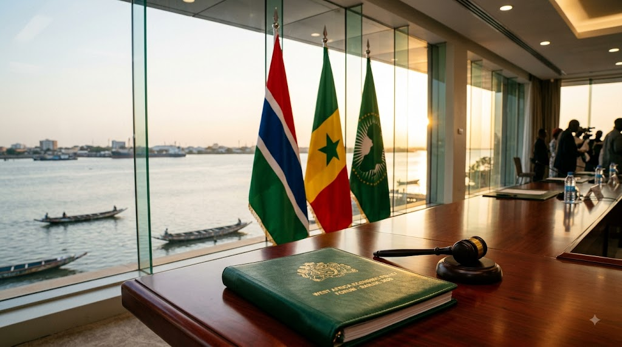
The Gambia Moves to Rewrite 61-Year-Old Foreign Policy
The Gambia is preparing to overhaul its foreign policy framework, which has remained rooted in the document adopted around the country’s independence in 1965, in a move aimed at aligning its international relations with contemporary national and global realities. Foreign Affairs, International Cooperation and Gambians Abroad Minister Sering Modou Njie announced the planned revision during an interview on Coffee Time with Peter Gomez, explaining that the government wants the country’s external engagement to better reflect its present priorities. The existing framework is described as open and inclusive, drawing on the principles of the United Nations and African Union charters while emphasising international peace, national sovereignty, territorial integrity and The Gambia’s national interest. The planned review forms part of a wider policy and institutional reform programme at the Ministry of Foreign Affairs, with a number of policy documents, legislative initiatives and strategies either completed, before Cabinet or under consideration by the National Assembly. The Point’s report on The Gambia’s foreign policy review.
The revision comes as The Gambia seeks to deepen its relationships within West Africa, particularly with neighbouring Senegal, with which it shares close historical, geographic, economic and cultural ties. Minister Njie described the Senegal-Gambia relationship as excellent, spanning defence and security, economic cooperation, education, culture and other areas. The two countries recently concluded their fourth Presidential Council meeting, where several cooperation agreements were finalised alongside a joint communiqué and two roadmaps covering defence, security, diplomacy, legal affairs, economic integration and financial integration. Implementation is being overseen through the Senegal-Gambia Permanent Secretariat. The emphasis on regional cooperation is significant because a contemporary Gambian foreign policy could provide a clearer framework for advancing national interests while strengthening West African integration and collective African diplomacy. Recent reporting by Foroyaa on Gambian-Senegalese relations likewise reflects the continuing importance of this bilateral relationship.
Beyond its immediate diplomatic implications, the review presents an opportunity for The Gambia to articulate a foreign policy suited to the changing political and economic landscape of Africa. A framework developed more than six decades ago inevitably predates contemporary priorities such as African economic integration, regional value chains, food and energy security, climate resilience, maritime security, migration, digital transformation and stronger African-led approaches to international affairs. The government’s stated commitment to sovereignty and national interest could therefore become an important foundation for a more assertive and strategically coordinated external policy, particularly within the African Union, ECOWAS and other regional institutions. If the review translates into concrete policies that place African cooperation, economic self-determination and mutually beneficial partnerships at the centre of The Gambia’s international engagement, it could represent an important step in updating the country’s diplomatic outlook for the next generation.