Mauritius Faces a New Development Challenge in Pursuit of High-Income Status
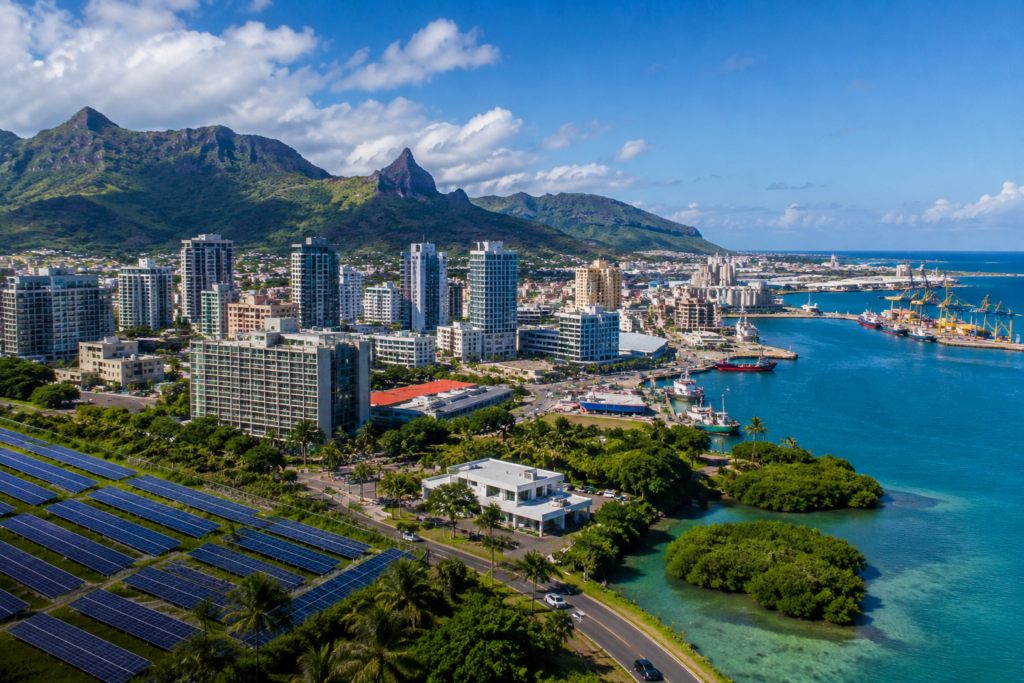
Mauritius is entering a new phase of economic transformation in which sustaining progress will require greater investment in productivity, infrastructure and resilience. According to the African Development Bank (AfDB), its 2026 Mauritius Country Focus Report calls for development financing to be mobilised at scale to support the country’s ambition of reaching high-income status. The Bank projects economic growth to slow to 3% in 2026 before recovering to 3.8% in 2027, with financial services, wholesale and retail trade, and tourism continuing to underpin economic activity. The assessment suggests that maintaining growth will increasingly depend on strengthening the foundations of the economy rather than relying solely on established sectors.
The AfDB identifies several constraints that Mauritius must overcome to sustain this transition, including labour-market rigidities, skills mismatches, an ageing population and infrastructure gaps affecting water, energy and port logistics. Climate change also creates a significant financing requirement, with the Bank estimating that Mauritius needs $5.7 billion for climate mitigation and adaptation under its 2026–2035 commitments. The report consequently points towards stronger domestic resource mobilisation, improved public expenditure and debt management, greater use of institutional and diaspora capital, and investment in green and blue economy opportunities. These priorities reflect the need to direct capital towards productive capacity and resilience as Mauritius seeks to move into a higher-value phase of development.
Mauritius’ high-income ambition therefore depends not only on securing more financing but on how effectively the country converts capital into long-term productive capacity. Its established financial sector and relatively diversified economy provide an important foundation, but the next stage requires stronger infrastructure, better alignment between skills and economic needs, technological development and greater resilience to climate pressures. The AfDB’s assessment places these investments at the centre of Mauritius’ development trajectory, highlighting an important transition from maintaining existing economic strengths towards building the productive foundations of a more advanced and inclusive economy.
Author: George Rainey.